4 apps that make my life better!


I am super grateful to be living in the age of technology. There are so many functions and aides available in the portable delight of my trusty iPhone that make my brain clearer and my days easier. 

I am not particularly techy. But I’m all for working smarter not harder – these apps help me do that. They’re not new or fancy but here’s how I use them. 


Calendar App 

This is about mind management. I keep ALL of my daily movements, appointments and events in this and I do whatever it tells me. I don’t say yes to any invitation or appointment without checking &/or entering it in my calendar. Having all this information centralised and on hand allows me to check the night before what my day will look like, eliminate the chances of a double booking and it’s programmable alerts (inclusive of allowing travel times) keep me on track throughout the day. 

Read more about the psychology behind it here – why you should remember nothing


Over – photo editing & image creation 

I use this to create all of my visuals for social media and communication. Blog graphics, quote images, invitations and promotions are all created in this super intuitive app. I import photos from free sites (such as StockSnap.io and Pexels.com) and use in-app artwork, fonts and templates to generate high res images for export to online or printing. 

There are font and image packages and upgrades available. I’ve purchased some and have found them great value but the basic package is sufficient without them.  


YouVersion Bible App 

The usefulness of this app cannot be overstated. From the benefit of having a Bible with me always (when I would not otherwise have access to a paper Bible) to its extensive range of translations and reading and devotional plans through to the audio functions – this is such a powerful app. You can book mark and highlight favourite passages, generate images of verses, interact with other users, host events …if only it could make me a coffee it’d be perfect! 🙂

Read 3 reasons to give audio reading a try

OneNote 

I am 110% sure I’m barely scratching the surface of the functionality of this app but what I’ve started to use I love. It’s a ‘digital notebook’ – a place to collate lists, notes and ideas that is always accessible. I use it to keep records and notes for meetings with individuals or teams, ideas for events and messages, and shopping lists all in the one place. Groups can collaborate via shared notebooks. Images and text can be saved as well as scribbles and drawings. 

What about you? What apps do you use frequently? Which ones would you recommend?

becoming more patient | #1 a big picture perspective 

On the scale of zero to ‘please don’t make me wait for anything, ever’ – how patient are you? How patient would others say you are?

Patience is defined as

the capacity to accept or tolerate delay, problems, or suffering without becoming annoyed or anxious

Waiting is not patience. Patience is about how you wait. Experiencing delays, problems and suffering doesn’t mean you’re a patient person – because we all experience those – the attitude with which you journey them is the determiner of patience. Doing things for a long time doesn’t mean you’re patient – it just means you’ve done things for a long time! Doing things without becoming annoyed or anxious is the key characteristic of patience. Our attitude, our grace, our tolerance, our peace and calm, our lack of reactivity, our persistence – these are all indicators of our degree of patience.

Relationships are where, simultaneously, our patience can be so profoundly tested and also where our patience is so intensely required. Impatient people make for unpleasant work colleagues, parents, partners and friends. Impatience expressed through frustration, snappiness, aggression, huffing and puffing or irritating repetitiveness (‘are we there yet?’) are killers of healthy relationships.

We all need to become more patient for our relationships to be positive and enjoyable.

As a quick thinker, speaker, mover, responder and decider, I constantly wrestle with impatience. I want everyone to move at my pace and sometimes do poorly at managing the lag time between when I get something and when others do … seriously, hurry up already!!!

TIP #1 – WE NEED A BIG PICTURE PERSPECTIVE! 

Often our impatience comes from being way too caught up in the moment to understand its significance (or lack of) in the big picture.

Like aggressively racing around someone in traffic only to be stopped beside the same car at the next traffic light. In the big picture of a trip to work, that car going a bit slower isn’t actually going to make us late. But our frustration in the moment can cause us to act irrationally or become unnecessarily emotional (and potentially make unsafe choices).

When children are learning to tie their shoe laces parents or teachers can become frustrated by the need to do it – ‘when are you going to get this yourself!?’. But there aren’t many adults who still need their parents or work mates to tie their shoes. They do get it. Keeping that in mind helps us to be more tolerant in the moment. This won’t be forever – even if it feels like it will.

So much of our intolerance and impatience is related to growth. We want others to get what we get; to know what we know and think like we think and respond like we do. But, often, they don’t have the same knowledge, wisdom, emotional maturity, life experience, perspective or skills and so are unable to respond the same way we would until they do.

When we zoom out our focus to see the big picture it grows our empathy and changes how we gauge others’ actions. Keeping the end in mind can drastically increase our grace, compassion and understanding in the now.

What do you think? How would keeping the big picture in mind shift your ability to be more tolerant and patient in your relationships?

Read more

Part 2 – wisdom over reaction

Part 3 – being others focussed

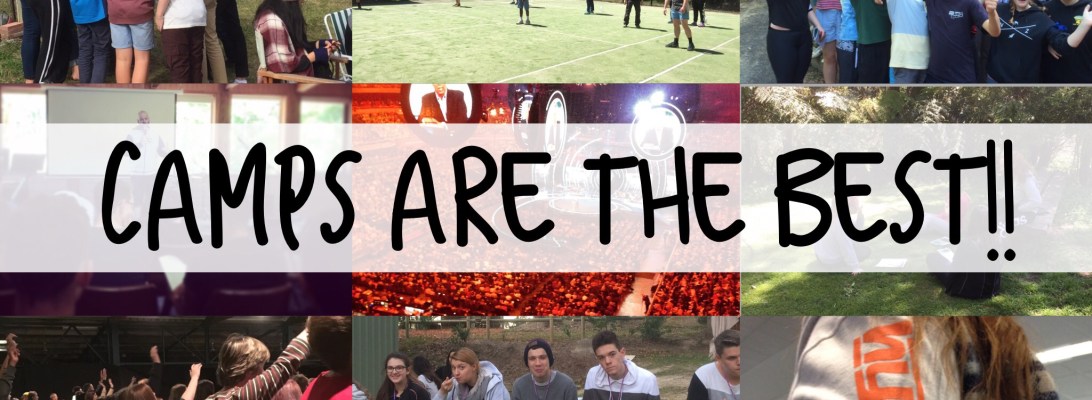
camps are the best!!


When I was 7 years old I made my own response to Jesus at a camp. Mum & Dad were Camp Parents at a teen camp which meant I got to tag along and I can still recall many details of the moment when I was touched by Jesus in a personal, powerful way. 

Camps were a significant part of my faith journey as a youth. I lived in a small country town where only a handful of teens were part of my church. It was incredibly important for me to connect with a broader network of Jesus followers to ground and inspire my faith as I navigated my teen years. 25 years later some of the people I met at those camps are some of my closest friends and key players in my continuing God-story. 

As a Youth Pastor I have seen and championed the value of camping to the discipleship of young people. There are many reasons for their value but I think among the most impactful is the intentional setting aside of time and attention to make oneself open to the plans and purposes of God. 

There’s a new environment – a beach, a mountain, a view – at the end of a physical trip that marks a disconnecting from the routine, familiarity and comfort of home. There’s the need to sign up, save up and plan towards it that builds expectancy for what might happen. There is a new community created for the set time – relationships started and built in that set apart environment. There’s the worship and teaching sessions on a Saturday or Tuesday morning – normal “Sunday” activities engaged in a new way at a new time. There’s a leadership team who have been gearing up for this and are prayerful and hopeful for real God encounters and transformation – giving of their time and money to create an opportunity for young people to experience all that God has for them. 

Research points to camps as being a major contributing factor for faith retention and development. 


Critics of camps will point to the concern that camps generate an artificial spiritual ‘high’. They might observe behaviour afterwards and question whether or not that experience was authentic. I have ridden that wave as both a camper and leader. My belief is that ANY encounter with God is used by Him to draw us closer to Him. We don’t ever return to the same kind of ‘normal’; what we learnt is not un-learnt. The discipleship journey for everyone – particularly young people – is a series of steps and missteps as our faith increases and our personal story of God expands. 

I can’t recommend camps highly enough. The research is in. The testimonies are strong. The investment of time and money is worth the reward it reaps. 

What about you? How have camps been part of your faith journey? What involvement have you had in seeing camps impact others? What resources have you found to make camps most effective? 

can you believe we get to do this?


This is a sign that sits on my desk at work. Each time I read it – it causes me to pause again to acknowledge what a privilege it is that I get paid to be in ministry. 
I get to do this!

I get to pursue God’s gifting on my life for His Kingdom purposes and their expression through His church FULL TIME. I get to do some of my most favourite things in the world – (including but not limited to) preach His word, mentor and encourage emerging leaders and disciples, host environments where connections to God and one another are possible for people of every generation, help people discern Godly wisdom in their lives, bring the light of God’s truth into the darkness and despair of broken people, have a front row seat to God’s transforming power at work in people’s lives, equip and empower others for mission and ministry – for a job! Are you kidding me?!

Other people have to do that in their spare time. Other people have to work 40 hours a week in an office somewhere and then find ways to engage in church service and community in their spare time. 

Can you believe we get to do this?

Let’s not undervalue the weight of the role. 

Much is spoken of the burden and responsibility of ministry. It’s real and it can sometimes seem overwhelming. In recent years the notions of self-care and work-life balance have been raised in focus for those in full-time ministry in response to demoralising statistics on burn out and drop out. The stewardship God entrusts to His appointed leadership is one to be honoured and carefully held. 

Let’s not overstate the weight of the role. 

On the other side of the ledger is the incredible privilege and joy it is to have our vocation and our deeply held convictions and passions be so integrated. Let’s not lose sight of that. 

We are ministers not martyrs. 

The challenges of being in high demand, emotional investment, cost to family, potential financial sacrifice, and possible overwork or stress are not unique to ministry. People working in the marketplace experience theses things too. Many work places require long hours or shift work and many of them fail to offer any emotional support or compensation for families (as a church ought). There is a reality to the flexibility and nature of the ministry lifestyle that can in fact be more favourable than other careers. 
In a career sense, vocational ministry is simultaneously intensely unique and also quite ‘normal’. But in the richness of its devastations and burden and it’s profound honour and celebrations let us not lose sight of this arresting question. 
Can you believe we get to do this?

finding your voice in meetings


Have you ever walked out of a meeting with a mouth full of thoughts you didn’t express? Experienced that annoying niggle of disappointment that a decision was made without consideration of your unexpressed opinion? Ever sat in a meeting and felt inadequate to contribute?

Yeah. Me too.

It was only when I started coaching new staff on my team about how to engage in our broader staff team meetings that I became more aware of these behaviour patterns for myself.

Get heard early. 

Nancy Beach in her book “Gifted to Lead” speaks of the importance of hearing your voice in the room and doing that as soon as possible. She suggests that the longer you don’t speak the harder it becomes to speak. She recommends making a contribution early – even if it’s just to greet people or respond to other’s early input – to break the ice and clear the way for your further participation. It’s a great strategy.

Don’t wait to be asked. 

I’ve heard others say (and I’ve been there myself) that they don’t feel their opinion is invited or even welcomed in meetings. Might I suggest that your inclusion in the meeting IS your invitation to contribute. You are rarely requested to attend a meeting so that you can observe it. You’re in the room because you have something to say about the content of the meeting or because you have something to learn from the content. Either way, your statements or questions are expected on the basis of your calendar request. Generally speaking, if you’re in the room it’s because you’re meant to contribute. Don’t wait for a further invitation.

Embrace conflict and humility. 

It’s a well-beaten drum of mine but conflict is an essential component of effective anything! Meetings are certainly no exception. Conflict of ideas will make your team or company stronger and better. But it requires humility to see that happen. Be ready to have your ideas contradicted without taking it personally. They can still like you and disagree with your perspective. An un-adopted idea doesn’t necessarily mean they don’t like you so much as they just don’t think it’s the best idea on the table. Don’t let the knock back of one idea prevent you from offering any further ideas.

What about you? What difficulties do you encounter in finding your voice in meetings? What strategies have you or your teams utilised to be more effective at hearing the room and maximising the collective wisdom, creativity and talent of your team?

3 reasons you should be a mentor

Being a mentor is one of the more privileged, rewarding, and challenging things you can do! If you’re not one, here’s a few reasons I think you should consider it.

Because it’s not all about you! 

Whatever you know, have or experience is not just about or for you. It never is. Everything that you learn in your life, the skills you possess, the talents you develop, the capacity you have is never about you learning, possessing, or developing so much as it is about the IMPACT those acquisitions can have on the world around you.

To be a mentor is to realise that you have something to give. And you do!

Being a mentor is an acknowledgement that the wisdom you’ve acquired over the years is most wisely applied in the developing of other people’s wisdom! Even if you’ve earned it through a series of terrible decisions and catastrophic failures, your wisdom can be of benefit to those who are coming behind you. Even if you don’t think you’re particularly wise, you’re probably wiser than someone … in something … and it is upon us all to see that we don’t just hoard and protect what we know but that we use it in service of others.

Because it has redemptive power.

Your most disastrous mistake. Your most embarrassing failure. Your deepest wounding. Your greatest regret. These can all find a sense of redemption when allowed to be used to protect, prepare or comfort others.

Whether your story becomes one of warning and caution, one of inspiration and conviction or one of empathy and understanding … there will be something for others to glean from it and so it needs to be shared. And although it doesn’t erase the consequences, pain, guilt or regret it ensures that those feelings aren’t wasted. It brings something of purpose and usefulness out of experiences that would otherwise seem so wasteful and hopeless.

Would I rather not have experienced a broken marriage, grief, or failure? Absolutely! But if it’s happened, would I rather see the learning and the sharing bring life, hope, and wisdom to others? You bet!

Because you know it’s hard to ‘go it alone’.

You may never have had a mentor. You may have constantly craved that intentional investment and support or you might not even realised you were missing it. But I think we can all acknowledge that sometimes life is difficult and often times we are left to navigate life on our own.

New parents, young entrepreneurs, students, newly weds, first time home owners, emerging artists, writers and communicators can all feel like they’re stumbling in the dark – trying to work out how to conduct themselves in an industry or lifestage where everyone else seems to know what they’re doing but them. It can be intensely isolating.

You remember that. You can be part of breaking that pattern for those who are coming after you.

So, what do you think? Who could you be mentoring? What environments could you connect into where your wisdom and experience can be beneficially shared? What relationships could you be fostering to bring some of these mentoring outcomes to the fore?

(And just a little something for nothing … the reality is that you ARE leading, modelling and influencing whether you choose to or not. People are watching you and imitating you. A little more intentionality could help ensure that influence is positive and helpful.)

3 reasons you need a mentor


     So you make new mistakes. 
We do some of our best growing and learning from failure. Although none of us would ever seek it, we recognise that it is one of our greatest teachers. That being said, someone else’s failure is far less painful for you and yet the benefit can be just as great.

A mentor who is willing to expose their own mistakes and short falls and who has done the work of processing where things went wrong gives you the chance to get all the upsides of failure without the personal consequence.

It is the height of foolishness to repeat the avoidable mistakes of others and yet it happens often because we don’t lean into the wisdom and experience of others who’ve been there and done that.

     So you don’t walk alone. 

Whether a leader in business or ministry, a parent, a student, a full time worker – we are all prone to feeling isolated in our roles. We can fall to the belief that we are the only one doing or experiencing what we are doing or experiencing and bare an unnecessary weight in that.

When we reach out to mentors we ensure that we are not left to those feelings very long – if at all. The investment of encouragement and support from a relationship that is articulated and reliable gives us a sense of partnership that sustains and empowers us.

     So you give yourself every chance of success.

A well chosen mentor is a source of great wisdom and insight. Because of their own experience, qualification or status in their specific field they are situated to give great advice and direction. You tap into a breadth of knowledge and awareness that is well beyond your own abilities thus building your capacity at a rate you couldn’t achieve alone.
In a relationship of trust, correction and redirection can happen. Guidance can be given. Problems can be solved. Difficult conversations can be prepared for. Courage to do the hard things can be fortified.

What would you add from your own experience? What are the benefits you’ve reaped from a mentoring relationship?

Next in series 

/3 things to look for in a mentor
// 3 reasons you should be a mentor

3 things to look for in a mentor

Everyone should have a mentor (read here – 3 reasons you need a mentor) but sometimes it’s hard to know exactly who you are looking for. Here are three characteristics I believe are worth considering.

Find someone who is successfully doing something you want to do successfully. 

Be it in business, parenting, leading, discipline, advocacy, finances, study, fitness or relationships – whatever you are hoping to grow in, develop or attain – your mentor should be demonstrating elements of that competency. They should be further down the path than you. They should have the wisdom to be able to assess and articulate how they came to be successful – a person who can’t describe what they did to bring them to their current stage of life, work, serving or character will not be able to teach or lead you to a similar destination.

Find someone who allows you close. 

A good mentor will let you understand something of their life – of the path they’ve walked and the context in which they’ve developed their character, beliefs and skills. Beyond what they might teach you from their learning and wisdom, a great mentor will allow the story of their life to bring application and a shared sense of journeying.

There should also be a degree to which the vulnerability you express to a mentor is honoured with their own vulnerability. The safety of such an environment will allow the relationship (and you) to flourish.

Realise you might need more than one someone. 
Because your life is diverse and you are likely to be engaged across a number of roles or circumstances it may be most beneficial to have more than one mentor rather than expect one person to meet all your needs. Across the journey I have had a variety of mentors – each leading and investing in me in particular areas. I have had mentors around communication and preaching, generations ministry, being a female in leadership and ministry, writing and publishing, leading at the next level, and those who are more invested in pastoral care of me.

Finding one person who can be all things to you might be unrealistic.

What would you add to this list? What have you found about your own efforts to have a mentor or as a mentor others?

in series 

// 3 reasons you need a mentor
// 3 reasons you should be a mentor

trump, leadership & the language of abuse


When I was 13 years old, there was a boy in my Year 8 classes at school who would often grab me in my crotch. 

I would get to class quickly and try to position myself between two occupied seats but he was that guy with enough social clout to tap the person next to me on the shoulder and tell them to move or even get that done with just the flick of his head. 

I would sit my school books or pencil case on my lap as a deterrent. 

I remember him laughing. I remember feeling so unsafe. I remember not understanding why – what was he trying to communicate, how was I supposed to feel or respond?

Maybe he didn’t really know either? Where had he got the idea? What goal was he trying to achieve? What did his actions reflect of his understanding of sexuality or intimacy or respect for women? 

And then, then you hear the recording of Donald Trump – a 59 year old man (at the time), successful in business, of high social profile, educated, and relationally and sexually experienced. He is clearly heard to say about women, “when you’re a star …you can do anything. You can grab them in the p—y. You can do anything.” 

So, it’s just because you can? It’s just because no one tells you not to? 

Why is HE doing it? Does he think it’s sexy? Has it worked as a pick up measure in the past? Does he think women like it? Does he consider it foreplay? Does it feel like a conquest?

Whatever the motive and whatever the personal justification, he has ultimately given voice to the misguided behaviour of a 13 year old boy – and males of all ages – that ‘because you can’ supersedes all other filters for choosing a behaviour or action. The lack of respect for others (particularly women), the obscene level of narcissism, the depraved distortion of sexual intimacy and honour of another’s sexuality, the right of another to feel safe in their person – free from the expectation that someone might just grope their genitals at any time …all that and more just falls away. 

This is the fertile soil that nurtures abuse and entitlement and this man has just put language to it. 

This IS leadership. It is terrible leadership – but it is leadership. It is a person of influence using language of permissiveness and dishonour to shape the culture they are leading. 

This really is not okay. 

Our young men need to hear a different narrative and be called to champion a higher standard. Our women need men who will esteem and protect them – for everything they are – including their sexuality and physicality but extending deeper to their mind, their soul; their hearts. Our countries need leadership that embodies respect for every human and renders unacceptable anything that demeans or diminishes. 

Trump’s profoundly inappropriate attitude and words (including his lame charade of an apology) and the response they’ve received ought to be a wake up call for us all. A call to check our language, check our privilege, and check our leadership. 

We can do so much better than this. We must.