I am responsible!


After a trip to Rwanda to visit her sponsor child, Brooke Fraser, a Christian musician wrote a song that included the lyric “Now that I have seen I am responsible.” 


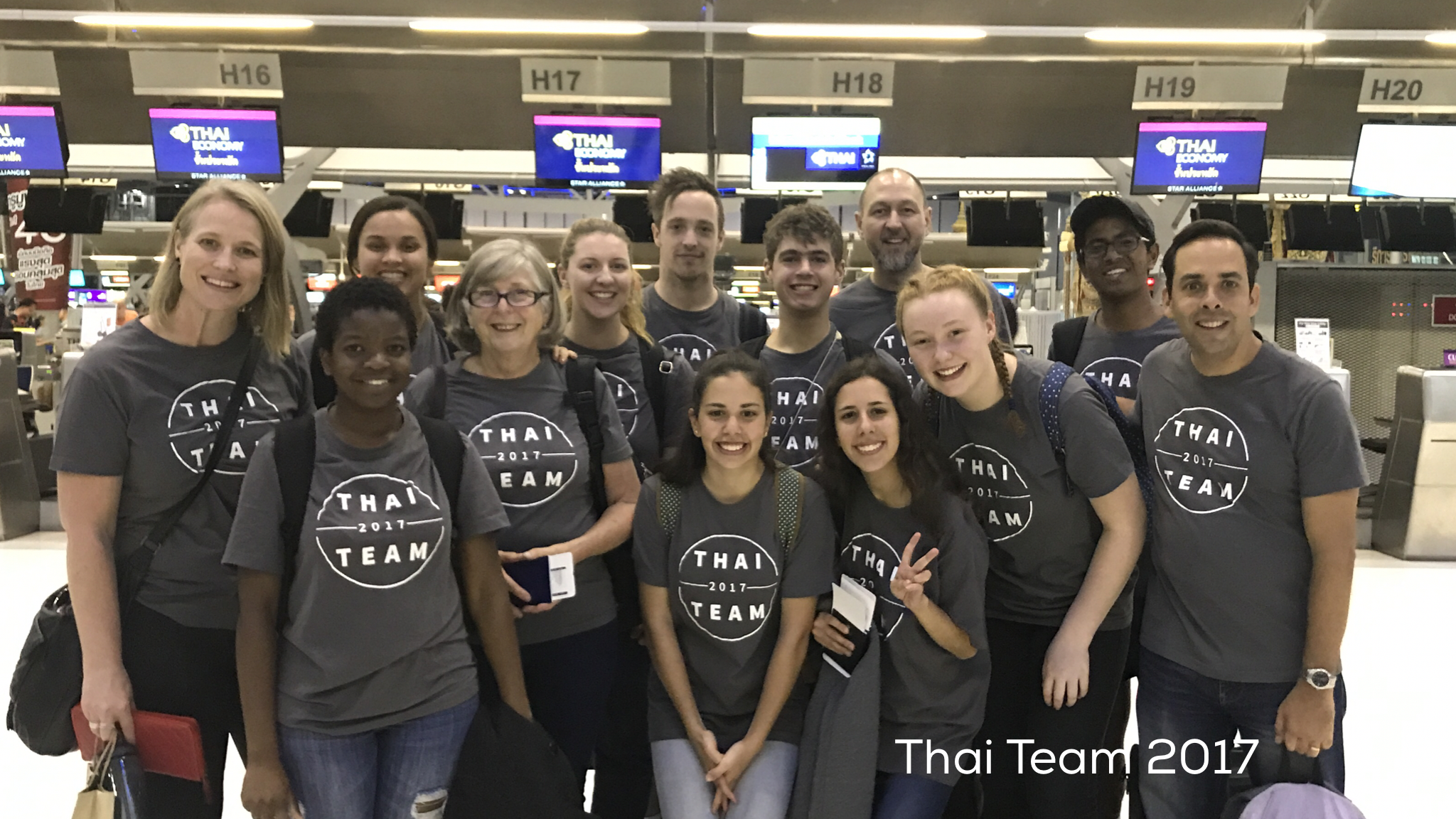
This became something of the theme for the “Thai Team 2017” – a group of people from my local church who signed up for a Short Term Mission trip to Thailand.  They considered it as they were exposed to experiences that were heartbreaking and confronting. Dark places that most need the shining Light of Hope and Truth.

As a team, one of our greatest fears is that the impact of the confrontation and inspiration of this trip might fade as time and distance increases. It happens a lot. People are confronted or deeply moved, but then life settles back to its normal rhythm and nothing much has changed. 

So we repeat that phrase – now that I have seen, I am responsible! I can’t unknow what I know or un-see what I’ve seen. I can’t walk away from the need without asking God to show me the part He’d have me play in meeting it. I can’t enjoy the privilege of wealth and circumstance without considering how I might leverage it for those without.

We are responsible. 

It is just as true for us here in our day-to-day as it is for the Thai Team. We believe that God brings people and circumstances across our path for a reason. When He leads HIS people into the spaces where there is need it’s because something of His activity in those people is the answer. We can trust that He will supply what we require to respond as He asks.

How about you?

Who has God led you to? To what need has He opened your eyes? What’s the passion of your heart? What hurt do you feel or injustice do you find intolerable?

Now that we have seen – we are responsible.

Listen TO THIS PODCAST to hear more reflections from the Thai Team 2017 trip. 


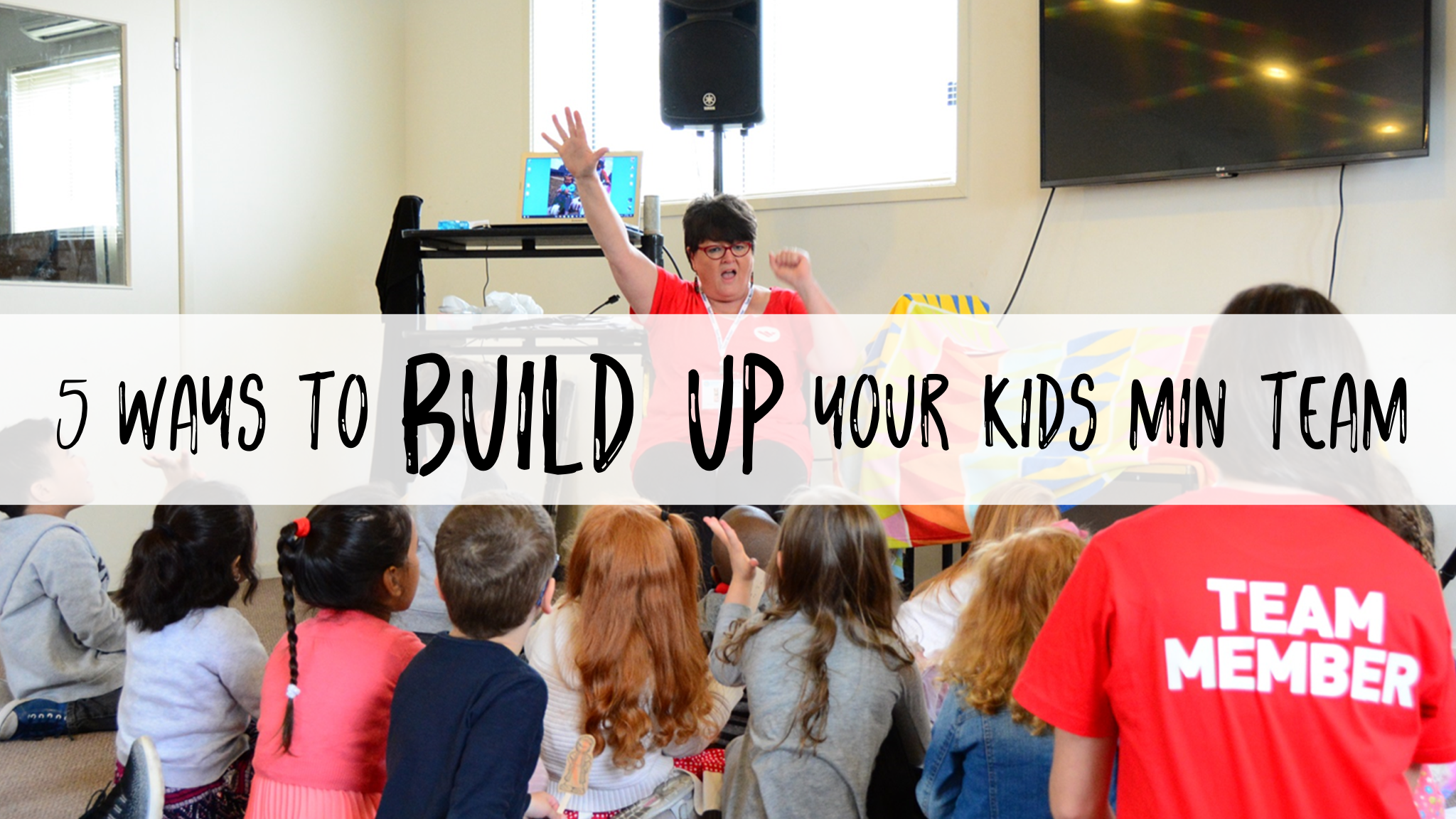
5 ways to build up your kids min team


Kids Ministry is an exciting and exhausting place to serve. Those who do it well will absolutely love it and give their all to it – but that doesn’t mean they are immune to feelings of doubt or fatigue.

Here are 5 very simple yet super effective ways you can make your Kids Min Team better – building them up in their sense of purpose and energy to continue to invest in our kids and community.

1. Thank them

Give them a high five at sign in. Tell them you appreciate their commitment to your children. Help them understand the impact their serving has on you and your family. Remind them of the important part they play in your church community. Drop them a note, give them a FaceBook shout out, or speak it out loud.


2. Know their names

Make the effort to learn and remember their names. Get to know them. Find out what year they’re doing at school, what they’re studying at Uni or where they work. Try and discover what they do for fun, what their favourite chocolate is, what music they listen to or what sport they follow. Your effort will communicate such high value to them.


3. Bring them coffee

Because Sunday mornings are hard y’all!! Surprise them with coffee or breakfast donuts and fruit. Buy the night team a pizza for supper or bring slurpees on a hot day.


4. Give them feedback

When your kids remember something they learned at Kids Min or when they tell a story about something their leader did – pass it on. Help them understand how their influence reaches beyond the scheduled ministry times. Encourage them to know the impact they are having in your kids’ lives.


5. Serve with them

Join the team – Kids Min teams ALWAYS need more members – and multiply their ministry effectiveness by adding your own gifts and skills. If you can’t be part of the scheduled ministry times, find ways to serve from home or during the week.

PICK ONE (or more) – and do it NOW!

the light is IN the tunnel


You’ve no doubt heard the saying before – ‘there’s light at the end of the tunnel’. Say it around the right (or wrong) kind of person and your attempts at positivity might be squashed by the response “hopefully it’s not a train coming to run you down!” (Hilarious!)

It’s a well used sentiment. When times are tough, when we’re in seasons of difficulty or despair, when we are swamped with busyness or challenging circumstances – we feel like we’re in the darkness of a tunnel. The idea that there is light at the end of it can be our best attempt at a more hopeful outlook. The notion that at some point, this time will be over and on the other side of it there will be a time of brightness or lightness – where this heaviness will be lifted and there is a new day to be experienced and enjoyed.

I’ve used it myself. I’ve heard it myself. It seemed to make sense enough.

Until one particularly difficult ‘tunnel’ season about 15 years ago. I was recently separated from a difficult and damaging marriage. I was completely messed up in terms of how I saw myself and what I was expecting from life and relationships and my future. It was so dark. Trying to process my way through it all was intensely overwhelming. There wasn’t hope IN my relationship and outside of it there was so much fear, uncertainty and self-doubt. Of course, it came in waves. Sometimes I was ‘ok’ but then others times it just felt like ALL despair and hopelessness. The grief and pain seemed all consuming.

In one of those more harrowing times I was talking to a good friend and ministry pal, Jeff. He remembers the conversation as well because it became quite significant for him too. He was trying to speak something positive or life-filled into my circumstances. Wanting to tell me it would ‘be ok’ – to paint a picture of something more hopeful for my future than what I was able to see for myself. And he went to use that phrase “the light is at the end of the tunnel” – but he felt a nudge from the Holy Spirit to a greater truth and instead, what he said out loud to me was. “Mate, the light is IN the tunnel!”

Despite my grief and my despair, God was present and active – right ‘here’ and right ‘now’. He wasn’t out there waiting for me at the end of the tunnel. He was with me IN the tunnel. The light of His truth was not just a thing off in the distance or somewhere in the future or on the other side of the hurt and hardship. Here and now. His hope, His peace, His joy, His grace and His love, were all present here IN the tunnel. It was so powerful.

It’s 15 years ago now and I remember it with clarity. Because not only did it start to immediately change my focus, attitude and expectation; to shift what I was looking at and looking for. But it also became a picture that has stuck with me and that God used to shape my attitude and posture during the intensity of that time but also – from that – to be something of my life message.

God’s presence IN our tunnels and IN our hardships means that they aren’t wasted times, or times of abandonment and rejection. He is present and active.

The message of my book and that I get to preach all across the country on the topic of Singleness is birthed in this concept. These seasons are never wasted. They’re not just the dark tunnel on the way to the light. They’re not just waiting times. God is present and active in every moment. He is working all things for our good and His glory. He is turning even what was intended for evil into something good and purposeful.

The light is IN the tunnel.

How might that encourage you or someone around you today? How might that truth shift the way we experience our dark tunnel times?


serve one another – an example to follow


“I have given you an example to follow” – these are the words of Jesus to His disciples, to us, and the very core of discipleship. Jesus is our example of how to live and love, how to follow after God’s heart and pursue His mission, ministry and purpose.

Except these words were said by Jesus after He washed the stinky, gross feet of His disciples. Removing His Rabbi robes, wrapping a towel around His waist – the uniform of a servant, and kneeling on the ground to pick up one disciple’s calloused, dirty, smelly feet after the other – washing and drying them. (The story is recorded in John 13.)

I have given you an example to follow.

Sure, Jesus says His disciples should also wash the feet of others as He has done, but His call to follow an example is greater than that.

Think like Jesus

The text tells us that Jesus is filled with a sense of who He is and Whose He is and SO He gets up from the table and goes to wash the disciples’ feet.

That’s a completely different way of thinking. It’s a way of thinking about power, about position,  authority, about influence, about knowledge, about privilege, about entitlement, that is completely different to our own natural thinking on these things. Position and power for us can mean you think you are to be respected, treated differently; honoured. Our ‘celebrity’ culture is such that a person’s status or fame or notoriety becomes something of a free pass – you get the better seats, the table in a ‘booked out’ restaurant – all the bowing, scraping and pandering to your every need and whim.

Jesus THINKS differently. He sets us a different example.

5 In your relationships with one another, have the same mindset as Christ Jesus: 6 Who, being in very nature God, did not consider equality with God something to be used to his own advantage; 7 rather, he made himself nothing by taking the very nature of a servant, being made in human likeness. 8 And being found in appearance as a man, he humbled himself by becoming obedient to death — even death on a cross! Philippians 2:5-8

Jesus HAS the power, authority and influence. He just didn’t consider it something to leverage for Himself – for His own gain. Instead He set it aside, He gave it up … He took off the robes and He put on the servant’s towel. He humbled Himself enough to become human … but then He went even further and died a criminal’s death – the lowest of the low.

Jesus THINKS differently.

Love like Jesus

Verse one set up this whole foot washing scene through the lens of Christ’s incredible love for His disciples … for us. He had come to the world because of love. He had walked with them in the years of His ministry in love. This was the night before He was going to be crucified for the sins of the world because of love. And here in this room as He washed the feet of each one of them … it was again, an act of love.

And, of course, we see as He did go to the cross – this incredible demonstration of His love for us.

Greater love has no one than this: to lay down one’s life for one’s friends. John 15:13

Jesus lay down His life for us out of love. This example that Jesus portrayed for us in the washing of the disciples’ feet was MAGNIFIED in the work He did on the cross. Stooping down. Bending low. Getting in amongst the dirt and stink and messiness. Using His power and authority to serve and elevate.

And our call is to let His love in us compel US to great love. To be so stirred by the needs of people around us and so captivated by the picture of others that GOD has – people of infinite worth and preciousness to their Heavenly Father – that we would respond by setting ourselves aside. Stooping low. Humbling ourselves. Putting others before us. Letting go of pride and self. Lifting our attention from us and our own needs and our own hurts and our own desires. Leveraging whatever power or influence or authority we might have for those who have none. Laying down our lives.

Jesus’ example is love.

He calls us to THINK like Him, to LOVE like Him and to RESPOND like Him.

Respond like Jesus

These two serving examples are pretty useless in terms of an actual activity to repeat.

Most of us can wash our own feet! We probably (hopefully) did it in the shower today or will tonight. If I showed up at your place and you proceeded to try and wash my feet I would probably be offended that you thought they stunk or that you were worried about me making your floors dirty or something – it certainly wouldn’t feel like an act of service. In fact, those who don’t like people touching their feet would probably leave rather than subject yourselves to a foot washing. It’s not a helpful illustration in that sense.

And neither is dying on the cross. There are very few opportunities we have to actually give our physical life for another’s. And certainly not in a way that would buy any sort of eternal security or salvation.

So when we look at this idea of ‘Responding like Jesus’ we have to look at the principles rather than the practice.

Carry each other’s burdens, and in this way you will fulfil the law of Christ. Galatians 6:2

We have to see that we are called to RESPOND … in humility, grace, forgiveness, generosity, compassion and mercy. We have to consider meeting needs of a practical nature – it might not be dirty feet but it might be a long lawn or overwhelming financial issues or a broken down car or a ministry opportunity. We have to consider meeting needs of a spiritual nature – to be prayed with and for, to be led to Jesus, to be helped to understand the saving message of Christ, to be grown in faith and obedience. And we have to consider meeting needs of an emotional nature – the need for companionship or a hug or advice or support through a difficult time.

We won’t be asked to give or do as much as Jesus – but we do need to be prepared for the fact that it will cost us something. Laying down ourselves by virtue does cost.

It will inevitably cost us time. It’s a blessed thing when you can serve someone else without impacting your own schedule – but it’s unlikely! It might be costly to your family, to your finances, to your study schedule, to your sleep – that’s what ‘laying down your life’ might mean. Completely setting yourself aside for the purposes of considering someone else. It’s big.

Serving costs us because loving costs us – it costs us something of ourselves.

Jesus says “I have given you an example to follow” … to serve one another in love.

Think like Jesus. Love like Jesus. Respond like Jesus.

becoming more patient | #3 being others focussed

Have you ever had those moments when you’re pretty sure everybody around you is just trying to annoy you?

Everyone is driving slowly when you’re in a hurry. People are walking the aisles of shopping centres like they’re balls in a pin-ball machine, making it impossible to get around them. The person at the petrol pump in front of you decides now is the time to clean their windscreen back to showroom condition. The clerk processing your payment at the post office reminds you of the sloths from the movie Zootopia (check it out, great movie). Your child is attempting a world record for longest time taken to eat a bowl of cereal. Your teenager is on their third trip back into the house to get something they forgot and can’t leave without. Your work mates are reaching new heights of meeting-hijacking abilities.

Of course you have those moments, sometimes many of them in succession. We all do. If you were getting anywhere with this whole ‘becoming more patient’ idea then these are the moments that are set to derail you … big time!

Patience is the act of waiting well. It’s the ability to endure set backs and challenges without becoming anxious or irritated. Patience is indeed a virtue and one that is tested on a regular basis.

In our efforts to become more patient we’ve noted the need to take  a big picture perspective – to step back and see things in their broader context. We’ve looked at the idea of planning in order to be more patience – choosing  wisdom over reaction. And we also need to keep an important truth in mind … it’s not actually all about you!

It turns out not everyone is intentionally plotting ways to make your life miserable – even though it might seem like it. The slow driver in front of you probably has no idea you’re there. The dude at the petrol station is more worried about his windscreen than you. Your teenager is probably just forgetful or distracted. There is not, despite the seeming appearance to the contrary, a concerted focus on the part of all the people in your world to make life miserable for you.

And this makes perfect sense as you read it. But in those moments, so much of our irritation is borne out of a sense of focus on ourselves that causes us to see everything as a deliberate mission to make us frustrated.

It’s not all about you!

Next time you find yourself impatient with the actions or in-actions of another person, pause and take a moment to consider the situation from their perspective. “I wonder if that slow driver is lost, or a learner, or experiencing anxiety or dealing with a crying baby in the back seat.” “I wonder if this sales assistant is new to the job or tired from a full day of work.” “I wonder if my teenager is trying to keep too many things in their mind, or is worried about something; or is hormonal.”

Such a thought process changes nothing of the circumstances. You’re still going to be impeded or impacted by the other person’s behaviour in some way. But patience isn’t about not waiting it’s about waiting well. And when we shift the focus from ourselves we release something of the anxiety and irritation and replace it with empathy or compassion.

What might that look like for you? How might taking the focus of yourself cause you to be more patient with others?


Read more –

Part 1 – big picture perspective

Part 2 – wisdom over reaction

disciplines of gratitude


For the last few years I’ve kept a “thankfulness jar”. 


The last thing I do each night before getting into bed is to pause and write a couple of sentences of gratitude for something that happened during the day. 

Some days it is really easy. I list off fun activities, great Ministry moments, joyful interactions with friends & family, experiences of wonder, tasks accomplished or things learned. 

Some days are harder. When I’ve been sick, when work has been hard, when I’ve spent the day alone; when my heart is burdened, these are the days I want to get into bed as fast as I can to bring them to an end! 

However, when I stand before the small piece of paper with a pen in hand, looking at an ever-filling jar of other moments of gratitude, I never fail to find something to write. 

Sometimes I’m just thankful that tomorrow is another day and another chance to do better. Sometimes I’m thankful that those days that are hard are offset by many days of joy and hope. Sometimes I’m thankful for specific people who God brings across my path to bless, inspire, encourage and support me. Sometimes I’m thankful for stewed apricots or a house full of people or God’s grace or a great movie I’ve watched or sore cheeks from laughing or new stationery or a new experience …the list is as diverse as it is endless. 

The discipline of gratitude is a necessary part of grounding my heart and mind in the truth – particularly when I am weary or despairing. It resets my internal dialogue – interrupting any negative thought track by forcing me to consider something positive. 

In moments of celebration and joy this discipline draws the attention of my heart to reflect on the source of those blessings, growing my faith and deepening my trust. 

What about you? Do you have any practices of gratitude that you regularly do? Maybe a daily discipline like this could be a place to start?

why you should send handwritten notes


In my box of treasures I have a handwritten letter from September, 1984. 

In the weeks before I received it, my grandparents had been tragically killed in a car accident. They were beautiful, Godly, much-loved people and a great loss to our family and their wide circle of friends. 

Enid was an older friend of our family. She had taken the time to write so that I would get a letter of my own in the midst of all the fall out for my parents and others as they processed what was needed to deal with both their grief and practical needs. 

It was special at the time and every time I come across it I am reminded again of the gift it was to me. 

I was recently chatting with a group of school teachers with many years of experience. We were swapping stories about our students and also our own teachers when one shared a story of connecting with a 26 year old ex-student who remembered receiving a “welcome to our class” letter from her 21 years earlier

In quick succession we all shared stories of letters given or received that had continued to be significant decades after they’d be written.

An encouragement note exchanged on a youth camp. 

A letter of condolence or care from a time of particular difficulty. 

A card of congratulations for an achievement or milestone. 

A note to commemorate a special experience or occasion. 

The more stories we shared the more we were compelled to go home and pick up a pen. 

How about you? Have you kept handwritten letters that have particular significance for you? Who could you drop a letter to today?

becoming more patient | #2 wisdom over reaction


Are you a reactor?

Maybe it’s better if we talk about someone else … do you know people who are reactors? Those with a short fuse. Easily frustrated. Quick to snap and lash out verbally or demonstrate aggressively.

In the quest to become more patient, we have to acknowledge that impatience is about reactivity. It’s having a low tolerance while waiting for things to happen as we are hoping or anticipating, or in the time frame we’d prefer, and dealing with the shortfall inappropriately.

In the previous post becoming more patient | #1 a big picture perspective  we noted that waiting isn’t patience, how you wait is. Patience is about our capacity to not become annoyed or anxious while we wait or experience problems.

Much of that annoyance or anxiety can be kerbed when we move more in wisdom than reaction.

Wisdom tells us that the trip to work is always a little busier at school times and so we should allow ourselves a few extra minutes – rather than getting frustrated by the crazy school drop off parents (and aren’t they crazy?!) that slow down our trip.

Wisdom tells us that kids need advanced notice to wind up an activity, prepare for departure or make a transition between tasks. Rather than calling ‘we’re leaving now!’ and then rapidly growing frustrated as the time tension gets greater.

Wisdom tells us that when we are tired, hormonal or under pressure we are less emotionally sober – perhaps now is not the time for that d&m or to process a significant decision.

Wisdom tells us that our sister/uncle/cousin/sibling/friend is going to do/say/be what they always do/say/be and to make a preemptive decision about how we will respond or short circuit it. Rather than being inflamed (…again!)

Wisdom sees us know our own limitations and triggers and grow in our understanding of others’. Wisdom helps us avoid circumstances that will fuel frustration or anxiety. Wisdom plans ahead for the times that are predictably tense and makes rational decisions about the attitude and posture we’ll carry.

Wisdom also reminds us to be more tolerant of others because of how others are tolerant of us. It recalls for us the times when people allowed us to fail and try again. When people were gentle with us as we developed new or better skills, understanding and competency. When people waited for us because we forgot something or were running late. When other’s repeated something we hadn’t heard or re-explained something we hadn’t understood.  Wisdom reminds us that we’re all in need of the patience of others at different times.

What wisdom have you developed that has kerbed your impatience? What circumstances would you be able to predict a tension that would require patience in order to prepare rather than react?

Read more

Part 1 – a big picture perspective

Part 3 – being others focussed

4 apps that make my life better!


I am super grateful to be living in the age of technology. There are so many functions and aides available in the portable delight of my trusty iPhone that make my brain clearer and my days easier. 

I am not particularly techy. But I’m all for working smarter not harder – these apps help me do that. They’re not new or fancy but here’s how I use them. 


Calendar App 

This is about mind management. I keep ALL of my daily movements, appointments and events in this and I do whatever it tells me. I don’t say yes to any invitation or appointment without checking &/or entering it in my calendar. Having all this information centralised and on hand allows me to check the night before what my day will look like, eliminate the chances of a double booking and it’s programmable alerts (inclusive of allowing travel times) keep me on track throughout the day. 

Read more about the psychology behind it here – why you should remember nothing


Over – photo editing & image creation 

I use this to create all of my visuals for social media and communication. Blog graphics, quote images, invitations and promotions are all created in this super intuitive app. I import photos from free sites (such as StockSnap.io and Pexels.com) and use in-app artwork, fonts and templates to generate high res images for export to online or printing. 

There are font and image packages and upgrades available. I’ve purchased some and have found them great value but the basic package is sufficient without them.  


YouVersion Bible App 

The usefulness of this app cannot be overstated. From the benefit of having a Bible with me always (when I would not otherwise have access to a paper Bible) to its extensive range of translations and reading and devotional plans through to the audio functions – this is such a powerful app. You can book mark and highlight favourite passages, generate images of verses, interact with other users, host events …if only it could make me a coffee it’d be perfect! 🙂

Read 3 reasons to give audio reading a try

OneNote 

I am 110% sure I’m barely scratching the surface of the functionality of this app but what I’ve started to use I love. It’s a ‘digital notebook’ – a place to collate lists, notes and ideas that is always accessible. I use it to keep records and notes for meetings with individuals or teams, ideas for events and messages, and shopping lists all in the one place. Groups can collaborate via shared notebooks. Images and text can be saved as well as scribbles and drawings. 

What about you? What apps do you use frequently? Which ones would you recommend?