becoming more patient | #1 a big picture perspective 

On the scale of zero to ‘please don’t make me wait for anything, ever’ – how patient are you? How patient would others say you are?

Patience is defined as

the capacity to accept or tolerate delay, problems, or suffering without becoming annoyed or anxious

Waiting is not patience. Patience is about how you wait. Experiencing delays, problems and suffering doesn’t mean you’re a patient person – because we all experience those – the attitude with which you journey them is the determiner of patience. Doing things for a long time doesn’t mean you’re patient – it just means you’ve done things for a long time! Doing things without becoming annoyed or anxious is the key characteristic of patience. Our attitude, our grace, our tolerance, our peace and calm, our lack of reactivity, our persistence – these are all indicators of our degree of patience.

Relationships are where, simultaneously, our patience can be so profoundly tested and also where our patience is so intensely required. Impatient people make for unpleasant work colleagues, parents, partners and friends. Impatience expressed through frustration, snappiness, aggression, huffing and puffing or irritating repetitiveness (‘are we there yet?’) are killers of healthy relationships.

We all need to become more patient for our relationships to be positive and enjoyable.

As a quick thinker, speaker, mover, responder and decider, I constantly wrestle with impatience. I want everyone to move at my pace and sometimes do poorly at managing the lag time between when I get something and when others do … seriously, hurry up already!!!

TIP #1 – WE NEED A BIG PICTURE PERSPECTIVE! 

Often our impatience comes from being way too caught up in the moment to understand its significance (or lack of) in the big picture.

Like aggressively racing around someone in traffic only to be stopped beside the same car at the next traffic light. In the big picture of a trip to work, that car going a bit slower isn’t actually going to make us late. But our frustration in the moment can cause us to act irrationally or become unnecessarily emotional (and potentially make unsafe choices).

When children are learning to tie their shoe laces parents or teachers can become frustrated by the need to do it – ‘when are you going to get this yourself!?’. But there aren’t many adults who still need their parents or work mates to tie their shoes. They do get it. Keeping that in mind helps us to be more tolerant in the moment. This won’t be forever – even if it feels like it will.

So much of our intolerance and impatience is related to growth. We want others to get what we get; to know what we know and think like we think and respond like we do. But, often, they don’t have the same knowledge, wisdom, emotional maturity, life experience, perspective or skills and so are unable to respond the same way we would until they do.

When we zoom out our focus to see the big picture it grows our empathy and changes how we gauge others’ actions. Keeping the end in mind can drastically increase our grace, compassion and understanding in the now.

What do you think? How would keeping the big picture in mind shift your ability to be more tolerant and patient in your relationships?

Read more

Part 2 – wisdom over reaction

Part 3 – being others focussed

will you be lonely at Christmas?


Christmas is fast approaching! The more organised have crossed off lists, the semi-organised have started writing lists and everyone else is definitely considering thinking about lists …soon …maybe. 

For many, Christmas plans are predictable. Traditions have been well established and you know where you’ll be for each part of the day (or 3 days), who will be part of each gathering and what the general format of each occasion will be. 

For others, Christmas represents looming fear. Plans are unconfirmed. Perhaps circumstances have changed since last year – a divorce, death, you (or others) have moved, work situations have changed, family life has shifted – and so you’re not really sure what it will look like. 

If you know someone who is alone NOW is the time to check they have a place to go and people to be with. Now is the time when the pending loneliness might be starting to niggle at their hearts and their peace. Now is the time they might be wondering if they ought to prepare for a quiet day alone. 

So NOW is the time to extend the invitation. A simple “what are your plans for Christmas Day?” will reveal those without any. And a follow up to be included in a specific aspect of your plans will, at the very least, have them know that if they spend the day alone it will be by choice and not by force. 

Celebration days can be difficult for Singles or those living far from or without extended family. “Everyone” talks of busy, tired, full and fun times that can contrast sharply with some people’s experience and that is part of the feeling of loneliness. 

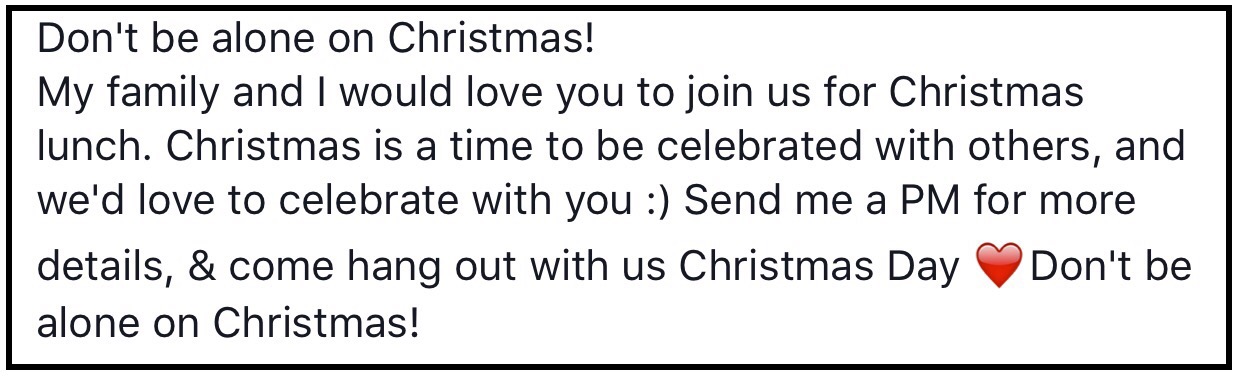
My friend posted this on FaceBook today and I love it. 


Who are you spending Christmas with? Who could you check in with? To whom might you extend an invitation to ensure they’re not lonely this Christmas?

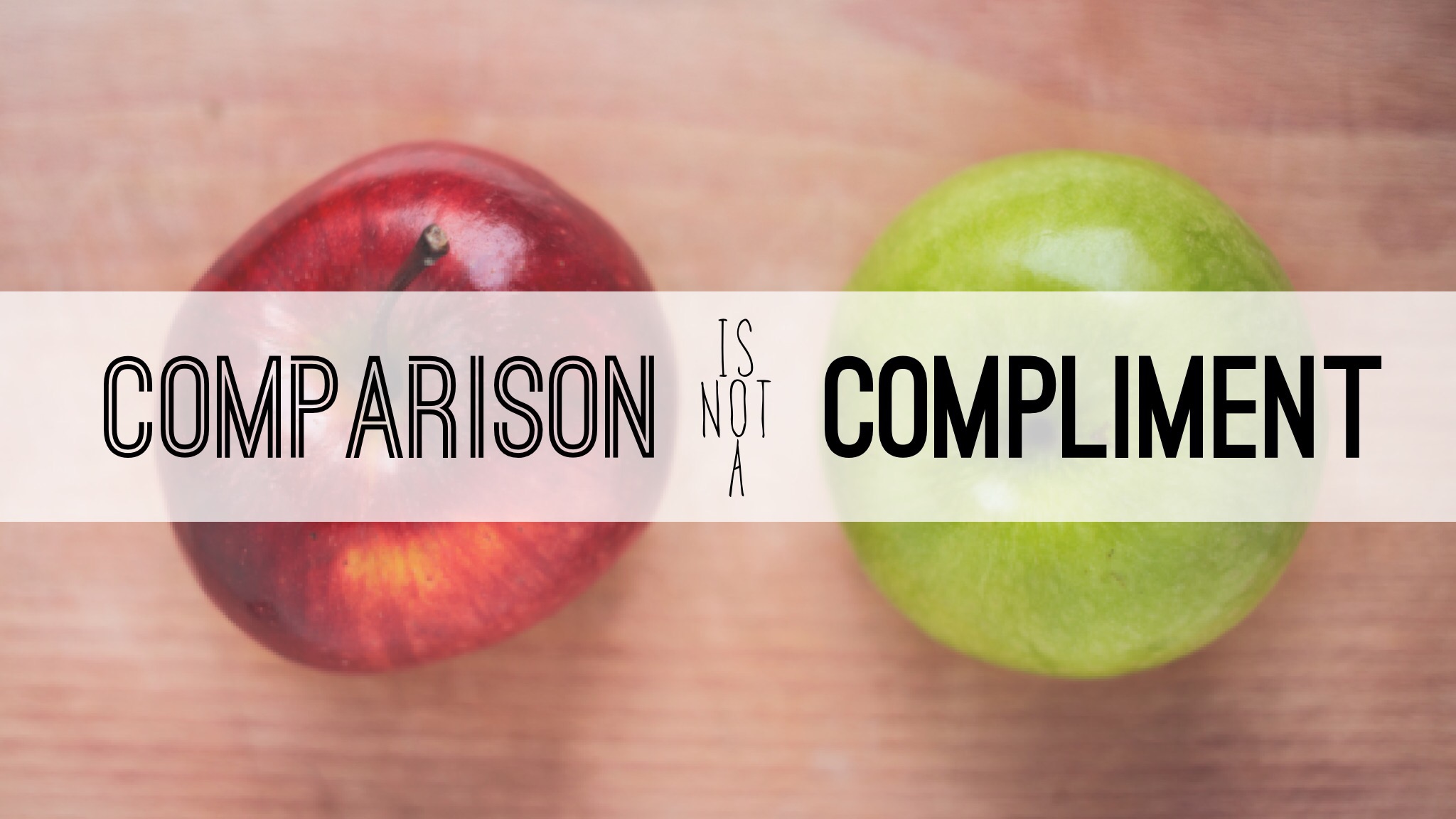
comparison is not a compliment


“You are so much better than my other hairdresser.” “I like your sermons much more than my previous Pastor’s.” “This chicken tastes better than what I make.”

These comments, and others like it, represent one way we try to compliment others that is sometimes not that complimentary at all. Comparison.

Comparison – by definition – is putting two things side by side and assessing them in relation to one another.

We do it when we’re shopping for apples, cars or schools. We do it when we are determining best value for money on insurance policies and home loans. This one is bigger, faster, fresher, or cheaper. This one has more included or provides greater flexibility. Based on what we value most we make a choice between the two (or several).

There are a number of reasons comparison as a means of encouragement can be deficient.

  1. The thing you’re comparing to might be rubbish and so it may not be complimentary at all. “Your choc chip cookies are so much better than my mum’s (… which are so rock hard I’ve chipped three teeth!)”. In this case, you’re essentially saying “Congratulations, your cookies are edible!” That’s a low bar to jump. Without a quantifiable measurement of the person or skill you’re being compared to, it lacks the substance to bring the encouragement we would hope. 
  2. You communicate that the focus of our striving ought to be on outdoing others rather than doing our own best. “You are such a great runner, you ran faster than Johnny …(who is 84 and has had 2 hip replacements).” Again, hardly a high bar to clear and probably not the goal an athlete has in mind when they hit the track. Our encouragement should never be to be better than anyone other than ourselves. Even comparison to the most elite in any field can become inadequate if our best would call us beyond that or to a different expression. 
  3. We call the recipient of our praise to pride. “Give yourself a pat on the back, you did better than the other guy!” Again, without any reference to how we’ve gone in relation to our own capacity, growth or expectations, we are drawn to consider our own performance in light of another and find significance in that difference. Developing any sense of superiority should never be the goal of encouragement. 

Complimenting by comparison doesn’t edify the person being complimented or the person or thing they’re being compared to. Encouragement that builds up and feedback that empowers should stand alone. 

These cookies are delicious – full stop. You did a great job – that’s all. Your efforts were amazing – the end. 

joining the fight for justice

If just one aspect of my life was changed …
If I was born somewhere different 

Like in one of the world’s developing nations instead of the affluence of Australia. 

If I lived somewhere different

Like in one of the nations where women are culturally oppressed, abused, discriminated against and treated as second class humans instead of one founded on the Christian principles of equality, respect and the basic acknowledgement of a human’s innate worth regardless of gender. 


If I was less educated

If I grew up in one of the African countries where more than 70% of school aged girls are denied access to education. Or if I was one of the women making up 2/3 of the world’s 774 million illiterate people. Instead of having access to quality free education and then completing multiple tertiary qualifications. 

(For more info read – Unesco factsheet on girls and education)

If I had a different family 
Like some families in Cambodia who sell their pre-teen daughter’s virginity to pay off their own debt. Or families who give their young daughters into forced marriages to buy their way into higher society. Rather than the family that nurtured and protected me and supported me in all aspects of my education and development. 

If I was poor

Like more than a billion people live on less than $2 a day – the World Bank’s definition of poverty. Rather than finding myself in the top 4% of the world’s richest people with all the privilege, opportunity and comfort that affords. 
Just change one of those factors and my life story could be entirely different. 

Today more than 27 million people are in slavery. Trading in people is one of the world’s richest industries behind the trafficking of drugs and weapons. 

People.

People are being sold, used, abused, and stripped of dignity. People – actual human beings – are being told and shown that their value is in what they can be exchanged for. That they’re a commodity. That their worth can be measured in dollars, in sexual favours; in their productivity in a factory. 

If you change just one aspect of my own life that could be me. 

Decisions made for me, good fortune, cultural factors, and opportunity have meant I have never been at risk of such exploitation. But I am no more deserving of such privilege than any one of the millions who are enslaved and suffering right now. 

I can’t do everything but I can do something. I can’t help everyone but I can make it possible for some to be helped.

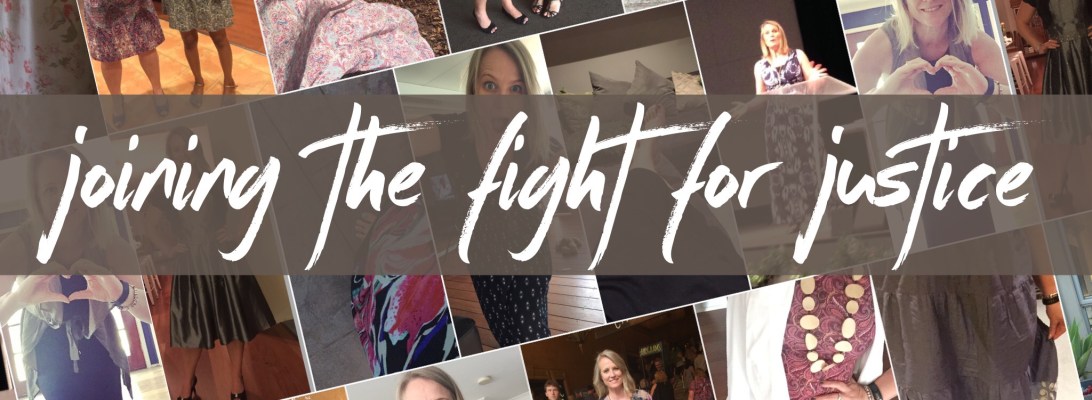
Right now for me that takes the form of participating in Dressember. An advocacy campaign that raises awareness and funds by encouraging women to wear only dresses for the month of December and inviting sponsors to make donations. 

In this way the dress becomes the uniform of the advocate and as we exercise our freedom to enjoy our femininity we draw attention to the plight of those who are oppressed because of their gender. 

Donate here – https://support.dressemberfoundation.org/fundraiser/836502

Join the fight for justice. 

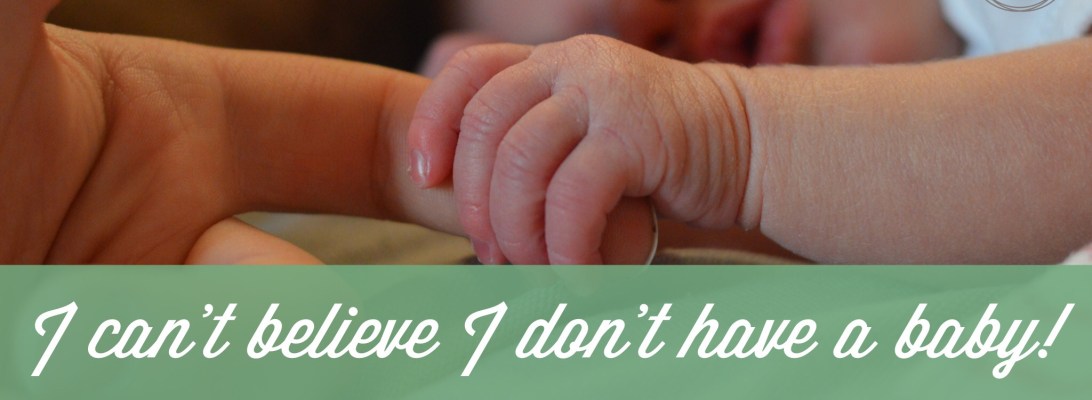
I can’t believe I don’t have a baby 


I’m over 40 and I’m Single and childless …and I just can’t believe it. 

Sometimes I am hopeful that might change, sometimes I’m quite at peace and content if it doesn’t, sometimes I’m overwhelmed with the grief and sadness of it – but mostly, I just can’t believe it. 

I just can’t understand how this is the way my life has gone! All I’ve ever wanted to be is a wife and mother. Instead, I continue to experience so many other amazing things that I didn’t expect, or even imagine would be part of my life. I have so many other roles – a friend, an Aunty, a Pastor, an author, a speaker, a leader, a traveller – I love so much about my life. But I just can’t believe I’m not a mum. 

I love babies. I love children. They seem to love me (well most of them). They run to give me hugs, they fall asleep in my arms; they each have their special nicknames, hugs and traditions. I have a well-developed ability to sleep literally anywhere (including standing up – true story) at any time which I am sure would be a handy skill to have as a sleep-deprived new mum. I have a full heart and an empty home.

I am supremely confident of God’s nearness and His love. He leads me, He defends me, He grows me in wisdom and in His grace. He comforts me. He blesses me abundantly. While I completely trust His plans and purposes for my life, I don’t completely understand them. I’m sure He knows what I long for. 

I can’t believe I don’t have a baby. 

My Singleness doesn’t feel like it has an end date. I can marry at any time – and I hold the deep hope that I will on an open hand. There’s a biological reality to my capacity to conceive and carry a child on which the window is rapidly closing, or may have already closed. 

I can’t believe I’m not a mum. 

I think it’s okay to say that out loud. I feel like it’s healthy to express that in context to a greater sense of contentment and peace. Because the sense of disbelief is actually the feeling that rises most regularly. Sometimes it’s so strong it physically arrests me and I literally stop what I’m doing and shake my head – I’m sure I have a confused expression on my face. 

And then? Well, then I take the next step forward into whatever else is happening and whatever else is coming. 

camps are the best!!


When I was 7 years old I made my own response to Jesus at a camp. Mum & Dad were Camp Parents at a teen camp which meant I got to tag along and I can still recall many details of the moment when I was touched by Jesus in a personal, powerful way. 

Camps were a significant part of my faith journey as a youth. I lived in a small country town where only a handful of teens were part of my church. It was incredibly important for me to connect with a broader network of Jesus followers to ground and inspire my faith as I navigated my teen years. 25 years later some of the people I met at those camps are some of my closest friends and key players in my continuing God-story. 

As a Youth Pastor I have seen and championed the value of camping to the discipleship of young people. There are many reasons for their value but I think among the most impactful is the intentional setting aside of time and attention to make oneself open to the plans and purposes of God. 

There’s a new environment – a beach, a mountain, a view – at the end of a physical trip that marks a disconnecting from the routine, familiarity and comfort of home. There’s the need to sign up, save up and plan towards it that builds expectancy for what might happen. There is a new community created for the set time – relationships started and built in that set apart environment. There’s the worship and teaching sessions on a Saturday or Tuesday morning – normal “Sunday” activities engaged in a new way at a new time. There’s a leadership team who have been gearing up for this and are prayerful and hopeful for real God encounters and transformation – giving of their time and money to create an opportunity for young people to experience all that God has for them. 

Research points to camps as being a major contributing factor for faith retention and development. 


Critics of camps will point to the concern that camps generate an artificial spiritual ‘high’. They might observe behaviour afterwards and question whether or not that experience was authentic. I have ridden that wave as both a camper and leader. My belief is that ANY encounter with God is used by Him to draw us closer to Him. We don’t ever return to the same kind of ‘normal’; what we learnt is not un-learnt. The discipleship journey for everyone – particularly young people – is a series of steps and missteps as our faith increases and our personal story of God expands. 

I can’t recommend camps highly enough. The research is in. The testimonies are strong. The investment of time and money is worth the reward it reaps. 

What about you? How have camps been part of your faith journey? What involvement have you had in seeing camps impact others? What resources have you found to make camps most effective? 

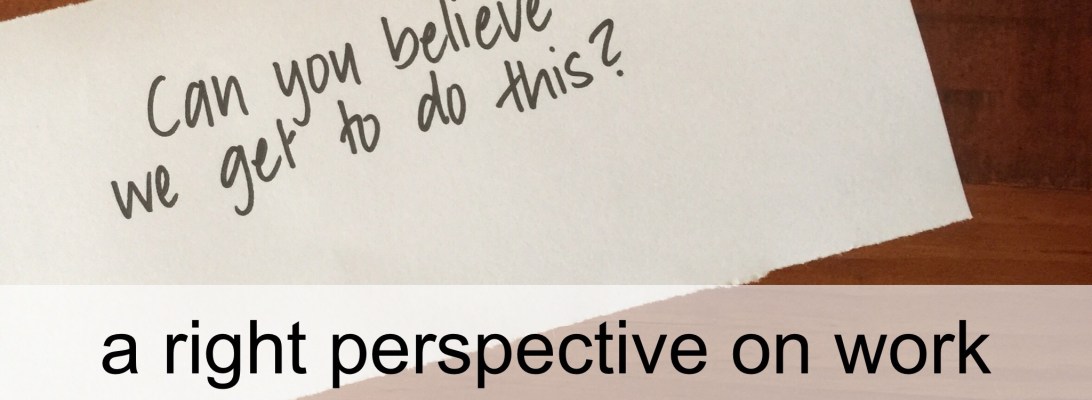
can you believe we get to do this?


This is a sign that sits on my desk at work. Each time I read it – it causes me to pause again to acknowledge what a privilege it is that I get paid to be in ministry. 
I get to do this!

I get to pursue God’s gifting on my life for His Kingdom purposes and their expression through His church FULL TIME. I get to do some of my most favourite things in the world – (including but not limited to) preach His word, mentor and encourage emerging leaders and disciples, host environments where connections to God and one another are possible for people of every generation, help people discern Godly wisdom in their lives, bring the light of God’s truth into the darkness and despair of broken people, have a front row seat to God’s transforming power at work in people’s lives, equip and empower others for mission and ministry – for a job! Are you kidding me?!

Other people have to do that in their spare time. Other people have to work 40 hours a week in an office somewhere and then find ways to engage in church service and community in their spare time. 

Can you believe we get to do this?

Let’s not undervalue the weight of the role. 

Much is spoken of the burden and responsibility of ministry. It’s real and it can sometimes seem overwhelming. In recent years the notions of self-care and work-life balance have been raised in focus for those in full-time ministry in response to demoralising statistics on burn out and drop out. The stewardship God entrusts to His appointed leadership is one to be honoured and carefully held. 

Let’s not overstate the weight of the role. 

On the other side of the ledger is the incredible privilege and joy it is to have our vocation and our deeply held convictions and passions be so integrated. Let’s not lose sight of that. 

We are ministers not martyrs. 

The challenges of being in high demand, emotional investment, cost to family, potential financial sacrifice, and possible overwork or stress are not unique to ministry. People working in the marketplace experience theses things too. Many work places require long hours or shift work and many of them fail to offer any emotional support or compensation for families (as a church ought). There is a reality to the flexibility and nature of the ministry lifestyle that can in fact be more favourable than other careers. 
In a career sense, vocational ministry is simultaneously intensely unique and also quite ‘normal’. But in the richness of its devastations and burden and it’s profound honour and celebrations let us not lose sight of this arresting question. 
Can you believe we get to do this?

5 lies porn tells


Porn is increasingly acknowledged as the prominent sex-educator of children. Young people are being exposed to porn well before they’ve shaped any sense of understanding or appreciation of sexual intimacy, let alone experienced it in an appropriate context. 

Porn lies. It presents perverse fantasies and entirely unrealistic scenarios as ‘normal’. And many are experiencing this education and degree of desensitisation without a contrary voice to bring perspective and truth. 

Porn lies. 

  • Porn depicts violence as enjoyable and normal. 


These statistics are horrific but they reflect the reality of the content of pornography and the narrative it writes. Aggressive, injurious and demeaning behaviour is met with no resistance or even feined enjoyment. Interviews with teens have revealed unmet expectations from boys and trauma for girls who were surprised to discover that the reality was far different from the movies they had seen.  

  • Porn shows lack of consent as a turn on.

A rise in reported rapes and sexual assaults finds some of its explanation in a genuine lack of comprehension on the part of pornified men of the place of consent. Porn implies that women are ready for sex anytime, any place and that their resistance or refusal is part of the game; the conquest. 

  • Porn asserts sex is a spectator sport. 

Not only does porn depict sex acts in public places or with multiple people present but the increased societal acceptance of porn means that public viewing and sharing has become more common place. Young people’s first exposure to porn can often be on a school bus or train or in a classroom where youth deem it acceptable to not only watch it themselves but include others in the experience. 

  • Porn infers anal sex is pleasurable for females.

Women in porn react affirmingly to anal sex when the reality is that doctors have reported an alarming number of young girls presenting with severe injuries, infections and potential long term damage from untreated wounds. 

  • Porn suggests exposure to porn is harmless. 

Increasingly younger men are experiencing erectile dysfunction and an inability to engage in physical intimacy rather than “virtual intimacy”. Addiction to porn is rife with people reporting spending as much as 8 hours a day watching – leading to loss of sleep and related health implications, ineffectiveness in work or study and for some, loss of employment and relationships. 

To say nothing of the links between the porn industry and sex trafficking, the impact of porn use on spouses and families, legal implications and related consequences. 

Porn lies. 

Don’t believe it. And rise to speak a voice of truth to those susceptible to entanglement in its deception. The hearts and health of our young people require us to help them discern reality from fantasy. Our women demand our advocacy. ADDICTED men and women need our support. 

Read here for a VicHealth issued summary of research findings. 

Read also – why you should hate porn

finding your voice in meetings


Have you ever walked out of a meeting with a mouth full of thoughts you didn’t express? Experienced that annoying niggle of disappointment that a decision was made without consideration of your unexpressed opinion? Ever sat in a meeting and felt inadequate to contribute?

Yeah. Me too.

It was only when I started coaching new staff on my team about how to engage in our broader staff team meetings that I became more aware of these behaviour patterns for myself.

Get heard early. 

Nancy Beach in her book “Gifted to Lead” speaks of the importance of hearing your voice in the room and doing that as soon as possible. She suggests that the longer you don’t speak the harder it becomes to speak. She recommends making a contribution early – even if it’s just to greet people or respond to other’s early input – to break the ice and clear the way for your further participation. It’s a great strategy.

Don’t wait to be asked. 

I’ve heard others say (and I’ve been there myself) that they don’t feel their opinion is invited or even welcomed in meetings. Might I suggest that your inclusion in the meeting IS your invitation to contribute. You are rarely requested to attend a meeting so that you can observe it. You’re in the room because you have something to say about the content of the meeting or because you have something to learn from the content. Either way, your statements or questions are expected on the basis of your calendar request. Generally speaking, if you’re in the room it’s because you’re meant to contribute. Don’t wait for a further invitation.

Embrace conflict and humility. 

It’s a well-beaten drum of mine but conflict is an essential component of effective anything! Meetings are certainly no exception. Conflict of ideas will make your team or company stronger and better. But it requires humility to see that happen. Be ready to have your ideas contradicted without taking it personally. They can still like you and disagree with your perspective. An un-adopted idea doesn’t necessarily mean they don’t like you so much as they just don’t think it’s the best idea on the table. Don’t let the knock back of one idea prevent you from offering any further ideas.

What about you? What difficulties do you encounter in finding your voice in meetings? What strategies have you or your teams utilised to be more effective at hearing the room and maximising the collective wisdom, creativity and talent of your team?