Today marks the start of some Long Service Leave I’ve taken with the intention of doing some writing.
It’s been ten years since I published my book and in recent months/years my regular writing practices have been somewhat thwarted. By self-doubt, negative internalized-external voices, by life and all its things! But today is the day I’ve been mentally and emotionally preparing for, anticipating, dreading, praying and seeking counsel about, fearing, hoping, worrying, and getting excited for. It’s here!
There are new chapters to add to the original book ahead of a reprint (the print run was exhausted quite a while ago!). There are some blogs and reading plans/devotionals just waiting to be put to paper and published. And there’s another book to write … maybe more than one? As always, there is no shortage of ideas or ministry imagination and opportunity.
As anyone aspiring to the work of writing will tell you, it’s an undertaking fraught with self-doubt, discouragement, and fear. There’s something so permanent about written words – especially published ones! For someone who speaks, shares, studies, and converses for a living (& a hobby!) I can find myself alarmingly hesitant. Who wants to read this anyway? What would I know? Do people already know *this*? Who am I kidding? Who am I to think these words need capturing let alone sharing? On and on in an endless loop.
For me, writing is a stewardship. A belief that entrusted to me are perspectives, insights, wisdom, stories, and language that God would have me share for more than just me. “When God gives you a message, it’s for ministry” is something my friend Suzie said to me that pushed me over the edge to actually begin writing my first book. He doesn’t teach me just for me. He doesn’t encourage me just for me. He doesn’t gift me with the heart and capacity to discern, unpack, and articulate just for my edification.
Stewardship requires that I write. Trust makes me pick up my pen. Faith gives me expectancy for fruitfulness. History reminds me of God’s faithfulness to use my offerings for His purposes and glory.
And with that, the writing season is officially open!
“Death by meeting!” “Grrrr, I have to go to another meeting!” “Back to back meetings today, the worst!” Been there, felt that? Or at least heard it from others. Meetings can feel like the worst part of a job or a day. It can seem like they’re stopping you from getting stuff done. They can feel pointless or fruitless.
If that’s the case, you’re doing them wrong!
If you lead any people (or any thing), meetings can be the most powerful and effective tool in your leadership toolkit. In fact, organisational health specialist Patrick Lencioni says meetings are to a leader as surgery is to a surgeon. They are the place where all the skills, knowledge and expertise of a leader (or a surgeon) are demonstrated by doing what those skills, knowledge and expertise are designed to do.
The bad press meetings get is often less about the mechanism of a meeting itself and more about the mistakes we make or the lack of intentionality we apply when executing them.
Meetings bring your people together and so THEY should focus on doing what can only be done in person
Relationship and trust are the core, foundational characteristics of a healthy and productive team. As such, meetings should be leveraged for the ways they can contribute to a team’s relational culture. Building connection and trust is best done in person and so every meeting is an opportunity to strengthen relationships amongst your team (subsequently improving productivity, results and the felt experience of team members).
Sharing food, taking time to catch up on one another’s personal lives, learning more about each other, discovering differences and strengths, and deepening understanding of personal history and context are mostsuccessfully achieved in an in-person (or online as second best option) environment. Research also tells us that when people laugh together they will feel more relaxed and comfortable, they’ll have warm associations and memories of the team and gathering, and will trust one another more.
An intentional portion of a meeting and/or cultural expectation of meetings should be focussed on building relationship. For those who will struggle to find this “productive”, make it an agenda item that can be checked off! This will also lower participants’ fear that time is being wasted if it is an intentional and planned for element of your agenda and also part of what you are measuring in your meeting.
If it’s your meeting – ACTIVELY lead it!
Think back to some of the more frustrating meetings you’ve been in and they’ll no doubt include experiences like wandering off course, not following the agenda, unclear outcomes, mishandled conflict, one or two people dominating the conversation, unrelated content being tabled and given air time, presenters being unprepared or participants not equipped with necessary data or information or … I could go on but have probably already triggered some of you! But in your meeting, guess who is in charge of all of that. Correct, it’s you!
Participants will feel more safe and purposeful when a meeting is being well managed. Clear sign-posting language is key! “Now we move to agenda item C”, “That’s a great point but not our purview today, let’s note that for Thursday’s meeting”, “Let’s keep our answers brief in order to give everyone a chance to contribute”, and “So, thisis what we’ve decided as our action step.”
DO NOT, I repeat, DO NOT check out of your own meeting! If you feel it’s got boring, irrelevant or uncomfortable in some way, imagine how those without leadership authority for the meeting might be feeling! Stay in the director’s chair and keep things moving. It will probably change your experience of the meeting as well as improving the experience for those attending.
Don’t do in the meeting what can be done by other means
In order to, as mentioned in point one, leave space for what can only be done when people are together, you’ll need to cull those things which can be done via other platforms.
Shared calendars or documents, email threads, and digital engagement platforms (Slack, Viva Engage, Whatsapp etc) are able to handle the transmission of facts, dates and data.
If (for example) an events calendar is available for all team members to access, sharing it in a meeting should be to add context or update changes, not just to read it out loud. Meetings are a good time to consolidate vision and mission and to check everyone is on the same page. Explanations or opportunities for clarifying questions are good. Reading large chunks of text or going too deep into the minutiae is a waste of the precious commodity that is your together time.
The planning portion of a meeting should be kept to a minimum. If a large event or project requires more team involvement it should have it’s own “planning meeting” or the time allocation should be well factored into the structure and communication of the meeting. (“This week we will be allocating time to plan for our upcoming super exciting event!”)
NOTE – Making this possible may necessitate an increased requirement of pre-reading, preparation or commitment to read and respond to other information as distributed. If some peopl come to a meeting unprepared, don’t punish the prepared ones by using meeting time to repeat what should already be known. Shape your culture by rewarding what you want repeated and having the “oh sorry, I didn’t read that email/article/memo” people feel the expectation to do so next time to more effectively contribute to the meeting.
Meetings can multiply impact
In a previous pastoral role I oversaw multiple ministries, programs and teams. In one instance, a regular hour long meeting with a key leader effectively “netted” me a 2 hour weekly program, significant leadership development for the members of her team and ongoing support and learning for her own development as a leader. When considered through that lens, that was potentially one of my most productive hours on my calendar!
A meeting should multiply your impact as a leader.
The investments you make in a meeting – creating healthy culture, networking team members to one another, offering learning and development opportunities, providing feedback and celebration, clarifying vision and purpose, food!!!, etc – can exponentially multiply your output beyond the chunk of time the meeting requires. As a team leader, 2 hours of effective investment in your crew will optimise the productivity of your team to achieve way more than you could possibly do in that 2 hours yourself. This is the way we must calculate the ROI of meeting time. The temptation to skip out on an hour long meeting must be hefted against the multiplication of impact lost.
Quick tips
Choose the right meeting for the specific context
A three minute standing meeting might be sufficient to keep a team moving day to day. Off site planning days have their place. Staff meeting over lunch can tick a lot of boxes at once. Varying levels of formality will be more appropriate for specific situations. Not every team, moment or decision requires a 2 hour all-in meeting. Assess the needs of the meeting and select the format that will best address them.
Don’t have people in the meeting that aren’t required
When you’re specific about what a meeting is seeking to accomplish you can be more selective in who is in attendance. Different teams and/or parts of teams will be more necessary to various stages of decision making or planning. Having the wrong people in the room could frustrate the process and frustrate them!
Prime your team members to the value of meetings
“I’m sorry to do this – a meeting is unavoidable – I know it’s annoying – I’ll try and make it as quick as possible – I’m just as irritated as you …” I already hate this meeting!! How we speak about meetings can shape the value we see in them and help orientate the expectations of our team members. “Let’s meet on this because there are important decisions to be made and you need to be part of that.” “I think if we allocate an hour to this we can identify some of the pain points and get our team back on track with this project.” “People have been working really hard on this, we need to celebrate them and help them see how their contribution is shaping our outcomes.”
Agree to rules of engagement
Value your team and their time, and build into a healthy relational culture, by having clear and implemented expectations. Speak to the behaviours and attitudes that can lead to the meetings after the meeting if they’re not addressed. The larger your team is the more articulated these expectations must be, but it is never advisable to assume everyone will contribute or behave the same way. Strong leadership is required to hold members accountable to agreed codes of conduct and to provide relational safety.
In July 2016 I clocked up 13 years in my job. I celebrated by spending the weekend with 9 young adults who are not only a sensational group of committed ministry leaders but also some of the finest individuals I know.
On Sunday, they stood on the stage at church and shared something of their passion for discipling youth and desire to grow in God. All of them have come up through our church’s youth ministry and are now wholly invested in the emerging generations.
They are a snapshot of why I love my job so much. They represent the fruit of the thirteen years I’ve been in this role. They (& others like them) benefit from and contribute to a culture that has been God-breathed – a way of doing ministry and community that I have given my whole self to. They are a gift to the Church that will keep on giving long after I’ve gone (either from the church or ‘gone gone’).
It’s hard to imagine a better way to have spent the last thirteen years. I certainly don’t regret having done so!!
We spend about a third of our waking life at work. That has to cause us to consider what we’re doing with such a significant portion of our lives.
Our work needs to be an endeavour worthy of such an investment. Either because our job role serves a vision or mission that positively impacts people and communities and sees other people empowered to do the same. OR because working there releases funds or time that allow us to fulfil a similar purpose. And if it’s neither of those – it should at least be fun!
Life is far too short to hate your job.
Life is too short to waste a third of it in meaningless employment or employment that inhibits you’re ability to engage your discretionary time more meaningfully.
Sure there are times when we’ve just got to take the job we can to pay the bills and feed the family. There are times when we take the job we can while looking for the job we want. But we need to prioritise work that matters or that resources us to engage in other things that matter.
Imagine your life until now was turned into a book.
If someone were to read it – how would you feel? “Oh yeah, you should read that, it’s a great story!!” Or would it be more like “let’s skip that bit you don’t need to know the details of that!” Or, “that’s just me doing nothing for 13 days straight!” Or “don’t look at that part, it’s not my best work!”
I’m deeply convicted to consider the fact that every day that I live is a page in the story of my life that I’m writing with God. Looking ahead, I would be most fearful of sections where I’d need to say “oh yeah, I was waiting for something to happen and so I didn’t do much then” or “I had an opportunity there but because of fear and/or laziness I did nothing with it” or “I’m ashamed of how I treated myself, others around me, my walk with God at that time.”
How do you want the story of your life to read?
It might not need to be a best selling page turner – world changing amazingness on every page – but surely we want it to be the story of a life well-lived. Nothing wasted. A life of meaning and purpose, right?
What do you want your story to read like?
Moses prays (in Psalm 90) “Teach us to number our days.” Show us how to count each day and make each day count. Show us Father, how to start each day seeking YOUR purpose and plans and to live intentionally toward them. Help us write a story that brings You greatest glory.
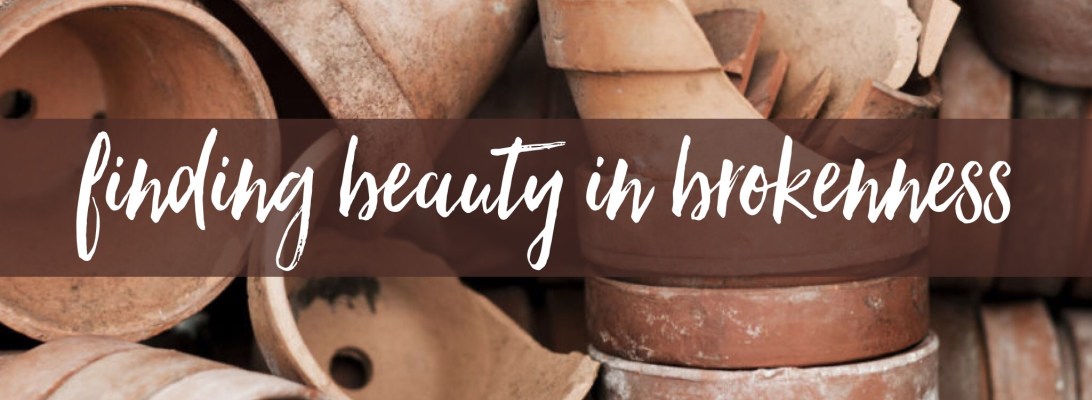
I was recently introduced to the art of broken pot gardens.
As the name suggests, broken pots are upcycled into mini tiered gardens. Using the pieces of broken pot to create retaining walls, steps and other features. Some are transformed into magical fairy gardens with toadstools and miniature houses.
When a pot is broken we generally consider it useless. It can no longer fulfil its purpose.
But these broken pot gardens are such a beautiful metaphor for the way God works in the brokenness of our lives. And this metaphor was made all the more powerful for me given the context I was in when I heard it.
I was observing a team serving in a Girls Juvenile Prison in Thailand. There were more than 20 girls in the session – most of them incarcerated for drug related offences, some for prostitution; some for theft. Two of them were pregnant, there were two mums breastfeeding babies.
So much brokenness.
The leader spoke of how we can feel like our brokenness disqualifies us from a life of purpose. How it can seem our bad choices or things that have happened to us can render us useless or leave our life in pieces.
She showed pictures of the broken pot gardens. They were beautiful. Ornate. Lush and healthy. So creative and imaginative.
Brokenness isn’t the end of the story. Your brokenness can be turned into something beautiful. Your life may not look like it was anticipated to look but that doesn’t make it useless or worthless.
Perhaps there’s a message in that for you today. What is being made of the broken pieces of your life? What beauty is being created to make something of the damage, wounding and disappointment?
“God can bring great fruit from things you really don’t want to do.”
That’s my main take away from a year of publishing, releasing and talking about my book on Singleness. God can bring great fruit out of stuff you just really REALLY don’t want to be doing.
Listen HERE to the sermon I preached at my home church on Sunday Jan 10th about how it’s okay to be not okay with what God is asking us to do – but the call on us is to submit to His greater plans and purposes. Jesus’ time in the Garden of Gethsemane as He wrestled with and then surrendered to God’s plans for the redemption of humanity through His sacrifice, reminds us that more is at stake than we could ever know and being in the centre of God’s will is always best even if it doesn’t feel best.
We ask and answer that question all the time – “how was your day?” Our answers can range from “Awesome!” to “Terrible!” but probably most commonly land somewhere in the middle – “good” or “fine.”
Behind our answer is a process by which we assess and determine how our day actually was. How we measure is based on our own priorities, expectations and circumstances.
Today was awesome because I didn’t have to get out of my pjs!
Today was the best ever because I signed three new clients.
Today was terrible because it rained.
Today was a success because the kids are all alive and the house is still standing!
Today was great because I won at tennis.
Today was awful because I fought with my friend.
Our definition of success (or failure) is unique to us and our particular life circumstances – and it can change from day to day.
However, without consciously considering those yard sticks; without intentionally determining what defines a successful day, we can find that each day just rolls into the next. We can find ourselves disillusioned by a seeming lack of accomplishment or meaning. We risk letting days slip by unmarked or acknowledged for the gift they are and the fact that each of them added together is painting the picture of our lives. They will become our history – the story we will tell.
When I ponder the question “how was your day?” I do it through the filter of these three categories.
MAKING and DOING
We have a natural leaning towards being productive and creative because that gives us purpose. Some of you don’t consider yourselves creative because when you hear the word creative you think artistic. Not all people are artistic but, made in the image of a creative, creator God, we all bear the capacity for creativity – to make things better – be that aesthetically or practically. Pleasing to the heart or eyes or pleasing in terms of efficiency and sensibility. A balanced account, a streamlined distribution process or practical storage solution are the marks of creativity – just as a sculpture, dance or poem might be. The sense of satisfaction found in a task completed, a list ticked, a system maintained, all testify to our bent for purposeful, meaningful engagement.
A good day involves making and doing.
LEARNING and GROWING
When we stop learning and growing we stagnate. And stagnant things are smelly and gross and not the stuff “good days” are made of!
Trying a new recipe, learning a new computer program or other skill, growing in God’s Word, increasing in patience and tolerance, understanding another’s perspective, engaging in study or training, and receiving coaching or mentoring all serve to stimulate our hearts and minds. They contribute to our ongoing transformation and maturing.
The concepts of ‘learning and growing’ also empower us to redeem otherwise frustrating, hurtful or meaningless experiences because we can always ‘learn and grow’ from them. When we reflect on a day of disappointments or challenges we can claim it as a “good day” for what God might use it to establish or develop in us.
A good day involves learning and growing.
LOVING and LAUGHING
Some people can be hard work and annoying. Not you, of course, other people. Many times the success or failure of a day can largely rest on the nature and outcomes of interactions with others. Introverts and extroverts respond differently to highly social situations and times of isolation but – in the end – it’s the people that matter most. In the image of a relational God and in the love of our Heavenly Father our hearts are wired for intimacy and relationship – with God and with one another. People matter more than things or tasks. Relationships matter.
Was it a good day? Who did you get to love? Who did you express kindness to? Who did you serve? Who did you encourage or comfort? Who did you help? And what of those things did you receive yourself from others? Who did you laugh with?
A good day involves loving and laughing.
For me, the success of a day considers each of those three categories. If a day includes all three it’s off the charts!! That’s a red letter day right there!! And as for a bad day? Well, I’ve come to discover that they are normally more to do with me not looking hard enough rather than these three things being entirely absent. This checklist then provides a lense through which I can reinterpret the events of a ‘bad’ day to see that it hasnt been wasted or futile.
In Jeremiah 29:11 God shows us that He is a God who makes plans for his people – plans to prosper them, to give them a hope and a future. God made us and knows our needs (and how to fulfil them) much better than we possibly could, and so it seems crazy that we would ever consider making important decisions without seeking Him first! As it says in Proverbs 3:5-7, being wise in your own eyes and leaning on your own understanding is just plain stupidity – we really need to trust in the Lord with all our heart and allow him to direct us! Continue reading →
Recently I spoke with a 29 year old woman. She is married with a young family and is wrestling with very real faith/theological issues. When she looks back on her life and the hurts and hurdles she’s faced, she wonders where God was during those times.
It’s an all too familiar question – among many believers, for non-Christians, for those walking away from Christian community and faith – ‘where was/is God in my suffering?’
My own life journey is spotted with moments of deep personal tragedy and trial: my parents’ divorce, the deaths of my Grandparents, life in a difficult blended family, a destructive and broken marriage, a miscarriage – times of intense grief and loss, great disappointment and hurt.
It was around the time of my maternal Grandparents’ deaths (they were killed together in a car accident when I was 11) that I first recall learning the verse from Romans 8:28 And we know that in all things God works for the good of those who love him, who have been called according to his purpose. My parents spoke it to us – we even knew a song about it that we would sing around the house. In ALL THINGS God works for the GOOD of those who love Him. All things, all times, always and all ways. We believed it. And so we entered a period of grief and loss with an expectancy that God was at work for good amongst it. We anticipated seeing Him working a tragic situation for His glory and we were not disappointed.
Years later, in the grip of a painful divorce the same truth rang in my heart. God is working for good. Somewhere in the mess, hurt, disappointment and fear His light is shining, His love is prevailing, His purposes are unfolding, His will is coming to pass. I looked for it. I expected it. And I saw God bring the most incredible healing, beauty and redemption – not only in my own life but, by His grace, in the lives of others too.
God works all things together for good.
It’s not a quick fix remedy. Hurt will come. Hardships befall everyone. We experience the darkest nights and the deepest of pains.
It’s about having a belief that nothing in God’s economy is ever wasted. The knowledge that even if we don’t see it with our own eyes or fully understand it in our life time – He is constantly at work for good in all things.
Just a thought …
Back to the woman I was talking with. I completely trust that God will help her to see that He has been working for good in her life – even when she thought she was alone. But I am grateful that I knew going IN to suffering that God would be there.
As parents and leaders we have the chance to instil such a belief in our young people.
Contrary to the cultural expectation of Gen Z – life will not always be easy. There is a real and present enemy, in a world set for decay – bad things will happen to ‘good’ people – we can expect that.
But ALWAYS God is working for our good. We can help our children develop the skill of seeing His activity in amongst great sadness and confusion. We can lay a firm foundation; a surety in the love of God expressed most potently in Jesus, an understanding that we will face big and small challenges in our lifetimes but that our God is bigger still. We can share with them the stories of His faithfulness in difficult times. We can grow in them an expectation that in the deepest of hurts and the greatest of losses God is at work to bring about his will and purposes. What an incredible opportunity!!












 kimberly smith