
8 questions to ask in every season


Our lives are a series of stages and seasons. Sometimes they pass faster than we’d like – when things are great it can seem like time moves too quickly (like holidays, for instance!). Other seasons just seem to go on forever – sickness, waiting, uncertainty, grief – these are seasons we’d love to skip through and yet they can seem interminably long.

Much of this is out of our control. We’re at the mercy of our age, our ageing bodies, the decisions of others or God’s sovereign (but ‘secret’) plans. So the only thing left for us to do is maximise the season we’re in.

Here are eight questions to ask to ensure that whatever season we’re in – however we feel about it – we’re not wasting this time.

1, Where is God?

There is no season in our lives that God is not present. Even when He feels distant – He is not. Look for Him. Be aware of how He is making His presence known – as teacher, comforter, defender, peace, joy … God is always ALL of those things, but in specific seasons we experience different aspects of His character in new or increased ways.

If there is a season for everything, then God is in every season. Look for Him.

2, What can I learn?

Each season holds opportunities to learn new things. What can I discover about myself? What can I learn about other people? When we are forced to walk a path we didn’t want or intend to we often meet people or experience things we might not otherwise have encountered. What can that teach us? What can we learn about the world around us and the character within us?

3, What can I develop?

Some seasons feel like they are ‘on hold’ seasons but they can actually be opportunities to develop skills and character we might otherwise not. Maybe part of the purpose of this season is for you to grow in patience, confidence, empathy, trust, compassion or a particular skill.

4, What does it reveal of me?

For better or worse, various seasons will show our “true colours”. In some situations you might discover that you are stronger or braver than you thought – or it might reveal that you’re NOT as strong or brave as you thought. A season might reveal impatience or intolerance. It might uncover a heart or passion for a cause or a specific group of people. It may reveal a deep trust in God or a strength you didn’t know you had.

5, What is it preparing me for?

Sometimes that’s a bit self-evident. If you’re studying something in Uni it’s probably a preparation for you to USE that study in some sort of work. (That’s the hope, anyway!)

Maybe it’s not quite as clear or obvious as that – but something of this season will be a preparation for a future season. Nothing is ever wasted. Some of your darkest seasons can be preparing you for a unique ministry to others who will go through similar experiences. Some of your greatest joys can be building reserves to draw on through more challenging times ahead.

6, What am I tempted by or to?

In seasons of struggle – of loneliness, grief, sadness, frustration, rejection, or difficulty – we are often tempted to self-soothe or distract to avoid facing them. When we are experiencing dissatisfaction or disappointment, when there is a sense of hopelessness in the season we are in we can turn to things like food, exercise, approval, pornography, alcohol, work, perfectionism, relationship – all manner of temptations or ‘escapes’.

Any of these things can lead us to addiction or to patterns of unhealthy behaviour when we try to avoid or ignore the realities of our season rather than face them.

7, What needs to be resolved?

Is this season you’re in the result of something that is unresolved? It may not be – but it’s a question worth asking. Is your broken relationship with your family because there’s forgiveness that needs to take place? Is there conflict or disconnect to resolve? Do you need to forgive? Do you need to ASK for forgiveness? Do you need to stop blaming someone for something? Do you need to stop blaming yourself? Do you need to get outside or professional help? That’s not to suggest that all our difficult seasons are our own doing, but it is a good question to ask to make sure we’re not being our own worst enemy!

8, What can I give or enjoy?

The uniqueness of each season – difficult or otherwise – will also hold unique opportunities to bless others or experience joy. Sometimes the joy will be harder to grasp and sometimes blessing or serving others will be the last thing we want to do, but maximising the season often comes on the back of taking a posture of focusing on others.


why I don’t do online dating

I have been single for many years and my desire to be married is well-documented. People often ask me for my perspective on Online Dating.

Because of how open I am to finding a suitable Mr Kim and the fact that I even advocate that friends should be in the business of making introductions, people are often surprised to discover I don’t do online dating.

Here are the three main reasons for that decision.

  1. I don’t think God is asking me to. 
    Super Christian rationale, I know! But it’s true. More than I want to be married – I want what (and who) God wants for me, so I’m cautious of running ahead of Him in this.
    I don’t expect Him to deliver a guy to my door (how weird would that be!?) but so long as I am putting myself in places – both physically and emotionally – where I would be open to His guy showing up, I think I’m doing all that I need to or can.
    In my current life stage and style, I am regularly in places where quality single Christian men would also be and I know lots of people who would/could/should know the quality single Christian men – I don’t feel like I need to pursue or create other contexts to make a meeting more possible.
  2. I don’t like the idea of meeting a guy outside of his context. 
    We all like to put our best foot forward, particularly when introduced to prospective partners and, more than anywhere else – online! I feel like I could most definitely be the best version of myself – or an even better version of myself – online. You can literally edit yourself in real time (I wish I had that function in real life!).
    Meeting a guy apart from his friends, family or workmates means that I’m only getting his version of him. There is so much about his character, his values and his general manner that I might never get to fully experience without seeing him interact with his family or meeting his friends or seeing how he responds to a ‘wrong’ decision on a basketball court. (I have a couple of personal stories that support this theory – perhaps for another blog.)
  3. I fear it would draw me to judgement and discrimination.
    I have checked out several dating sites – there’s often a certain amount of material you can look at without signing up or revealing anything of yourself. As I scrolled through the profiles – with minimal information provided – I found myself making really quick judgements and discriminating mostly on appearance or other shallow ‘preferences’. I consider myself to be a discerning person, and would back myself to make wise choices – but, what if God wants me to be with someone shorter, less educated, more outdoorsy, more bookish, older, younger or who lives further away than the choices I might otherwise make for myself? And what if it’s less about who I want for me and more about who I might be for someone else?

Disclaimer – this is MY personal experience, sense and decision (for now). I’ve been to the weddings of couples who’ve met online. I’ve seen God use this platform to bring together His choice of partners. People who do use this service may process these three points in a different way than I have. There’s no judgement or criticism from me but maybe these are cautionary thoughts for those considering it?

//FEEDBACK TIME//

Do YOU use Online Dating (or have you)? Have you reached a different conclusion than mine? I would LOVE to hear your story. Use this link to give some anonymous feedback for me to use to give another perspective on this topic in a follow up blog – “Why SOME PEOPLE do Online Dating”.


pumpkin soup mindset

Have you ever noticed how so many cafes have Pumpkin Soup on the menu? Now we’re in official soup season we might see some specials of a variety of different soups but Pumpkin Soup is on the printed, year round menu. 

In my expert, soup-eating-cafe-crawling opinion there are three main reasons this is so. 

1. It’s easy. 

Like, super easy! At its most basic – you chop up some pumpkin, maybe add an onion, boil it to death in some chicken stock, blend it up and there you go. A dash of cream, a sprinkle of chives and some crusty bread on the side and it’s cafe ready. 

2. It’s safe. 

For the non-adventurous diner, Pumpkin Soup is a low risk order. “Hmm Pumpkin Soup, I wonder what that might be?” It’s soup, made from pumpkins. You know what you’re gonna get. 

3. It’s available. 

A nice big pot of soup, frozen into individual serves is perfect for a quick buzz in the mickey-groover (aka microwave) ready to serve on demand. 

Now, I’ve had my share of Pumpkin Soups when working in cafes and looking for a simple, low cost lunch option to fuel my writing. But every time I do, the above three thoughts come to mind. Because 1. I don’t like ordering (or paying for) things I know I could make at home, 2. I enjoy dining out for stretching my culinary palette – give me some Morrocan spices, give me an ingredient I don’t recognise that makes me feel like I’m being a little daring to order it. And 3. I want to see my lunch served from that big steaming pot of yumminess or see a pile of vegetable scraps being scraped into a bin that make me think there may still be some nutrients active in my food. 

In context to these thoughts – I wonder if cafes aren’t missing the opportunity to show themselves as more creative, current or keen to bring us on something of a culinary journey each time they choose Pumpkin Soup over the myriad of other winter warmers that might be available? A Pumpkin Soup mindset might be easy, familiar, safe and practical – but it’s hardly going to set the cafe world alight or bring any great education or change to the palettes of cafe crawlers. 

Which made me wonder, where else does the Pumpkin Soup mindset manifest itself? The answer that first came to mind was, “pretty much everywhere” but the thought that quickly followed (associated with feelings of frustration and discomfort) was “in church life; in our faith”. 

The Pumpkin Soup mindset is the enemy of relationships, church cultures, faith walks, communities and families that we desire to be dynamic, vibrant, thriving and growing. 

How often are we tempted to make choices based on what is easy, safe and available when none of those things is likely to bring about best outcomes? Where in the call to be a disciple or make disciples was easy, safe and available part of the deal? I’m not talking complicated, unsafe and exceptionally difficult just for the sake of it, but when we’re looking to grow in our personal faith or to encourage our faith communities to greater obedience, greater acts of love and service, greater witness – the Pumpkin Soup mindset is just not going to cut it. 

Next time you’re in a planning meeting, chatting over a problem with a friend, making a big decision, looking to God for guidance on an issue, choosing a course of action, or seeking to grow in your faith, reject the Pumpkin Soup mindset. Be ready to explore a variety of flavours, ingredients or cuisines – be open to the challenge, the unknown, the extra effort and the faith-required options that God might call you through to His best. 

5 things every kid needs to grow in faith || another voice

#3 another voice

“So, if David told you to jump off a cliff would you?” “If Sarah stuck her hand in a fire, would you?” 

I bet you’ve all had a parent or teacher make this kind of argument to you. Maybe you’ve said something similar as a parent or teacher? This would normally be in response to a child using the argument (or defence), “but David told me to” or “but Sarah was doing it”! 

Of course, as a kid, you thought this was just the proof you were needing to confirm that your parents had officially lost the plot!

“Yes Mum, of course I would jump off a cliff if David did. Because I’m stupid and I do stupid things!” [written in bold ‘sarcastica’ font] – complete with eye roll and huffy body language. 

Or “Sarah wouldn’t put her hand in a fire, she’s not stupid, why don’t you like Sarah?!”

But here’s what we know for sure. The reason parents say things like that is because they genuinely worry that the influence of others on their kids’ lives could legitimately lead them to do really silly things! It’s not hard to imagine a scenario where there’s a group of friends hanging around a fire and Sarah sticks her hand in and everyone joins her! 

They know – and subsequently fear – that people do become who they hang around with. That they will mirror the behaviour and attitudes of those they admire. That they will gravitate to any people or groups that extend belief, acceptance or respect. They know a young person’s sensibility and sense of consequence is easily overridden by the intensity of their need to belong. 

Parents get this. Teachers and leaders get this. So the logical next step is to use that power for good rather than evil! 

To grow and persist in faith young people need voices other than their parents reinforcing the life changing message of Jesus. They need other adults and invested “older” people who will show them a way of living after Jesus that is relatable, attainable and authentic. 

While parents will always be the number one influencers in their children’s lives they also say dumb things about fires and cliffs! (wink) Children are looking for other people to affirm or contradict the values and beliefs of their parents. People that provide relational connection, belonging, respect and safe places for exploration of doubts will win a place of influence in the heart of young people. 

Faith communities and families can work together to nurture these relationships and our young people to maturity and flourishing in life and faith. (Read more at how to fix your church). 
 5 Things Every Kid Needs || Think Orange

#1 a really big God

#2 other people who believe what they do

#3 another voice 

#4 uncommon sense

#5 nosey parents

how to fix your church 


When your children or youth are reluctant to go to church things can get hard. (Read more – against their will

If you’ve elevated and communicated the value of church attendance, negotiated and threatened your lips off and offered bribes of every incentive you can possibly imagine but are still struggling to get buy-in from your kids – there’s only one thing left to do. 

You need to fix your church

You know the old adage about not just identifying the problem but being part of the solution? Yeah, that. It’s time to roll your sleeves up and get involved in fixing your church. 

It may seem like a big challenge (depending on what your church dynamic is like) but it may take less than you think. Here are some low output-high impact first steps. 

  • Show up yourself

Passionate, genuine, supportive and committed people who show up regularly and consistently make every/any church better. Whether your attendance almost doubles the size of the congregation or fills one of 60 rows, every person who shows up contributes something vital to the dynamic of a gathering. 

It may seem a little arrogant to assert that your very presence could improve your church – but flip it over and consider what would happen if everyone thought their attendance didn’t matter and didn’t show up!

And as a side note – not surprisingly, your kids won’t be passionate about attending a place that you are not demonstrating a passion for. If your attendance is more about a week-by-week decision based on feelings and schedules rather than an anticipated fixture in your weekly rhythm you undermine the integrity of your desire to see your kids engage. 

  • Serve. 

There isn’t a church in the world with the budget to professionalise all aspects of church life. And even if finances allowed it, it would not reflect the church as Jesus declared it or as Paul and others advocated in the New Testament. 

Pretty much every service your church provides is possible because of the contributions of “someone” like you. “Someone” with skills, time, talents, heart and availability to serve one another – and the desire to see needs met, people connected, God encountered and disciples developed in a variety of ways for a diversity of people. 

The only way your family benefits from corporate worship, generational ministry, events, and shared faith experiences is because “someone” serves. “Someone” gives their Friday night or their Sunday morning over to teaching and leading – in music and word. The building is physically ready and you are welcomed because “someone” comes early to prepare for you. Small groups happen because “someone” opens their home. Morning tea is served because “someone” sets up the urn and packs away afterwards. 

Again, if everybody thought that they didn’t need to contribute you would show up to a very different kind of service, in a very different physical space and ultimately be paying for some very expensive psychiatry bills for your burnt out Senior Pastor! It’s not rocket science. You need to give something for the system to work. 

Side note – your child is much more likely to feel connected to a faith community when they experience a sense of ownership and purpose (true for you too). Serving is essential for fixing your church

  • Influence the influencers. 

All people thrive under the intentional investment, discipleship and encouragement of others. In any church environment there are going to be specific people who have influence over your child/ren. They may be positional influencers – those with the title of “leader” or “coordinator” in specific departments or ministries. They may be proximity influencers – those they’ll serve next to or find themselves spending time with. Or they’ll be influencers by personality – that cool young adult that everyone gravitates to or the super caring and connected person whose name your kids remember and repeat most often. 

If you want to spend your fixing energy wisely, direct it to the influencers. If, by your investment, care and counsel, you can help an influencer flourish you will be influencing your own kids through them. You will be making the church a better place for them (and others in kind) to connect to and thrive in. 

Invite your kids’ youth or kids ministry leaders for dinner or to birthday parties and basketball games. Host their groups in your home. Pray for them. Know them well so as to be able to assist them best. 

You can fix a lack of leadership or develop the competency and confidence of leaders by your intentional encouragement and support of those who God has appointed and who stand to impact your child’s sense of belonging in a faith community. 

***

Again, they’re simple steps but also essential. I am constantly surprised by the number of people who will speak of their disappointment in them or their families not finding a place of belonging, connection or support in a church community and they haven’t tried any of these fixing tips. They’re certainly no guarantee that your child will grow to love God and church – but their absence has a far greater likelihood of assuring the opposite. 

six truths about extroverts 

I’ve been an extrovert for many years now! Whilst not necessarily an expert, I do feel like I’ve been refining my extroversion skills over time. I think I can extrovert as well as anyone! 

Conversations about introverts and extroverts can tend to be quite polemic. In an attempt to be understood and validated we can often make sweeping generalisations about either temperament that are actually contrary to the goal of understanding. 

Here are a few thoughts that I think represent common misconceptions about extroverts and the nuances of how they tick. 

They aren’t all outgoing. One of the most outgoing people I know (Hey Paulie!!!) is an introvert. Introverts can be socially competent and dynamic. Conversely, not all extroverts are outgoing. While they may crave social interaction they may not be the ones to generate it. It can just be enough for them to be present in a socially vibrant space rather than the ones hosting or leading such interactions. 

They aren’t all good at meeting new people. Because of their need for social interaction at a high level many extroverts develop social skilfulness- but not all. Extroverts aren’t all naturally self-confident and often face the same fears as many others face when meeting new people or stepping into potentially awkward social environments. 

They need good people, not just any people. This may be more a function of age and maturity – but I find that not all people fulfill my extroverted need for social fueling. It’s not always enough to just be present in a large or loud social gathering – there needs to be social stimulation and satisfying personal interactions for energising to occur. While they may be good at small talk they can also crave deeper forms of communication and social exchange to feel more fulfilled. 

This isn’t an “extrovert’s world”. As much as introverts might feel ‘the world’ is innately geared toward the extrovert – extroverts could make a similar case. The very concept of people needing their own bedroom, a private office, or silence for effective work in exams or libraries – the general social norm of being in large public places but not talking to each other (waiting rooms, shopping centres, trains etc) – prayer meetings, lectures, and movie theatres where information is received without interaction – these are all potentially more satisfying for an introvert even though they would be perhaps deemed as “social” environments. 

They need physical rest in non-social places even if they don’t crave it. The energy they gain from being with others is physically finite. It doesn’t replace their need for sleep or to pause for physical renewal. In moments when they are emotionally deenergised by being alone, their bodies are still rejuvenating and necessary biological processes are taking place. 


Their need for others makes them vulnerable.
An introvert is completely self-sufficient in regards to reenergising. In different lifestages that alone time may be harder to find but ultimately a few moments behind a locked toilet door or in the car on the way to the next social gathering can top up their tank. An extrovert cannot replicate the social energy found in the company of others and is therefore reliant on others to re-fuel. Whilst all humans need other humans for a myriad of reasons, this aspect of the extrovert makes them needy of other people which puts them at the mercy of others. 

[Read more about Extroverts & Quiet Times]

extroverts & “quiet time” // a double discipline


I’ve been wrestling with this topic for years. 

My thoughts are based on the following foundational truths. 

1. I am an extrovert. A raging extrovert! I know a few 3 year olds who are as extroverted as me, but other than that I am almost in a league of my own. 

Extroversion is NOT about personality type – it’s about energy management. Extroverts are energised by being with people. Social and relational engagement not only fills their love-tank but actually fuels them

Time alone is therefore de-energising. For me, if I had an instrument that showed my energy levels you would see it start to plummet the minute I said goodbye and hopped in my car. Extended time alone sees me resembling those ballerinas in jewellery boxes who just get slower and slower and the music gets painfully strained until it all … just … stops. 

I have learned to not make any important decisions during those times – regret would be inevitable. To reflect on any sense of my general health, life satisfaction or optimism for my future in the middle of extended alone time would not actually be indicative of how I really feel, think or am. 

[** see here for more info on Introverts & Extroverts]

2. Devotional time with God is important. Infinitely so. Jesus modelled for us a rhythm of life that includes withdrawing for intentional time for reconnection with Father God. Disciplines that draw us to meditation on God’s word, listening for His voice and realigning our heart and will with His, are necessary for our spiritual and emotional flourishing. 

You may already be ahead of me on this – but those two truths can actually be in conflict. The idea of “quiet time” or alone time with God being energising or life-giving is contrary to the natural experience of an extroverted person. 

An introverted person doesn’t need to be encouraged to spend time alone or in quiet. They crave it naturally because they need it for their own re-energising and even coping. The discipline of devotions or quiet times is more about being intentional – consecrating that alone time for the purposes of deepening and energising their walk with God. 

But for the extrovert it actually becomes a double discipline. The discipline to seek time alone and the discipline to seek intimacy with God in that place. 

My greatest sense of God’s presence, my most intense moments of growth and nurture, my deepest experiences of God’s transforming power, and my most clear sense of His leading and revealing, have all happened in non-alone times. I am also an external processor (not all extroverts are) which means my ability to see and interpret the things God is saying or doing is exponentially enhanced by sharing the moment or experience with another person; out loud. 

I do my daily Bible reading with the use of an audio app. Hearing the words spoken aloud is far more useful for my receiving and understanding than silent reading. When something is powerful or convicting or confusing – I repeat it out loud in order to confirm its meaning. Even my quiet times aren’t quiet!

When I do a prayer walk, extended retreat time by the beach or an intentional time of seeking God on something – any revelations or illuminations have to be shared with a third party before they really take root in my heart. It’s as though they are not really real until they’ve been confirmed by communicating them with another person and having some sense of affirmation or shared understanding of their significance. Any time we are “sent off” to spend alone time with God I use a fair portion of it preparing to share what God had laid on my heart with other people. I need to hear it outside my head and have the collaboration and engagement of others to confirm its life and meaning to my circumstances. That’s not a function of insecurity or lack of trust in God’s word to me or even any doubt that it’s God’s voice I’m hearing or His direction I’m sensing. It’s a function of personality and temperament – knowing who I am and how I operate. 

Someone once said that books on quiet times are written by introverts who don’t need them and read by extroverts who feel guilty they can’t follow them! I don’t have the research on that but I can definitely appreciate the point. 

celebrating mother’s day

As a gift to our Mums and families on Mother’s Day, our church photography team offered family portraits. I love that our church did this! We were excited to think of all the mums who would love the chance to have a quality photo taken with their brood – for free! Winner, right?

What I didn’t anticipate was an extra blessing that came from offering this service. One that swept me – and others – up in its expression of God’s heart for His family and generated such a great buzz amongst those who were present. 

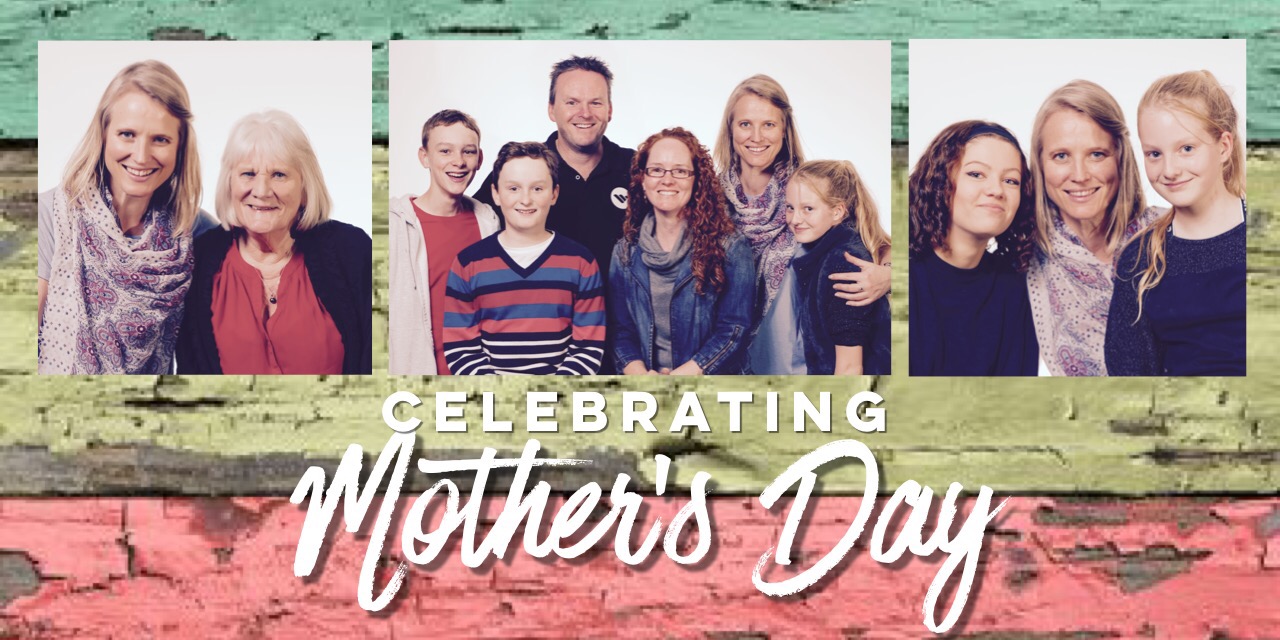
It’s all summed up by these three photos. 


The first photo is my Mumsy and me. Isn’t she the cutest? Bless her little silver socks off! If she’s lucky enough, I might get it printed on a coffee mug so she can look at us all the time! 

But here’s where the fun started. 

The middle photo is of my great friends, the Whites … and me! As they rounded up their children for the photo Sharyn walked past me and said, “Get ready, you’re in the next photo!” I replied, “Me?” And the answer came, “Yeah, of course, you’re family!” It’s no wonder my smile was so cheesy and bright! 

Of course, the photo itself doesn’t make me family. But it captures a heart and relationship that is very much about being family. These guys have consistently extended themselves to include and support me in ways I have come to rely on and I love the relationships I share with them – individually and collectively. Such a blessing. 

The third photo is a “3 generations” photo. Elise came alongside me and said “So, family photo? Y’know, spiritual mum and all that.” (Of course I am far too young to be a biological mother to someone her age. Cough. Cough. Not really. Sigh.) And then she called out to young Alex and said, “It’s family photo time!” Of course, Alex’s eyes lit up at the idea of her mentor (and hero) including her. And so the three of us snuggled up for a shot. 

Together, these photos reflect what celebrating Mother’s Day looked like for me. An opportunity to honour and love on my own Mum; being included in a family’s celebration and expression; and acknowledging the special role of spiritual mothers. 

As people lined up for photos in our foyer, those relationships were captured in various combinations, with similar feelings of honour, inclusion and gratitude. 

Mother’s Day is simultaneously one of my favourite days and one of my most difficult. I have long ago made the decision to celebrate the day (read “I will celebrate Mother’s Day“) because despite my grief and longing there are many women who are worthy of recognition and honour. This year I found that in celebrating others I, too, was celebrated and it was a truly memorable day. 

I WILL celebrate Mother’s Day


This Sunday would have been my 14th Mother’s Day. An early term miscarriage saw the hope of that ignited and then grieved (& grieved again, differently, surprisingly; sporadically over the years). 

I still find it hard to believe that I’m not a mother. As I move deeper into my forties I am forced more often to face the biological realities but for the most part I’ve just lived with an expectation that (husband &) children would be part of my world. 

And then comes Mother’s Day. 

In many ways it’s a day that represents the hopes and dreams that are deep in my heart and the grief that those are unrealised. There’s a wistfulness; a longing that is undeniably present. Envy and jealousy rear their heads. I wish for the hand drawn cards, the dodgy school stall gifts, the crumbs in the bed from a delivered breakfast. And even more than that, just the day to pause and whisper in my heart “I am a mother” and celebrate all that it would mean for me to be that. 

The reality of Mother’s Day is that it’s a hard day for many. Those grieving the loss of their own mothers – to death or broken relationship, struggling with infertility, facing difficult family dynamics, processing illness (etc) often approach Mother’s Day with fear, anxiety or an overwhelming desire to hide away and avoid. 

But here’s the decision I’ve made and make again this weekend. I WILL celebrate Mother’s Day. 

Of course, I will celebrate my Mother (who I am abundantly grateful for) but I will also celebrate my friends who are mothers. Because I love them and I love that they have produced mini-thems and I want to champion them in this infinitely important role. I will help lead our church in honouring our mums and encourage them with the full resource of the church to keep Mum-ing well. This Sunday, we will cheer for all the women in our church who “mother” us – with their love and care, their modelling of Christian womanhood, their role in the lives of women and girls (& guys alike) needing the investment and wisdom they offer. 

I know some will disagree with me but I don’t think we ought to care for our non-mothers or those grieving in our midst by not celebrating those who are mothers. I believe the idea that we might not acknowledge mothers in deference to those who are wounded and hurting isn’t what family (in its broadest sense) is meant to look like. 

Rejoice with those who rejoice. Mourn with those who mourn. Rom 12:15

Do we not celebrate someone who graduated from university because not everyone has? Do we not high five someone who ran a marathon because not everyone has? Do we not congratulate someone on their 90th birthday because not everyone lives to celebrate theirs? No. That would be crazy. Families are full of people with a diverse range of experiences – both positive and negative – and one of the things that makes us family is our ability to journey the breadth of those experiences with one another. Where we carry one another in our grief and difficulty and we multiply joy by celebrating one another’s successes and wins.

Our tendency toward comparison and the associated emotional processing means that a day like Mother’s Day can make us feel more of the grief and heart-sickness of longing and loss – but our reality is actually unchanged from this Sunday to the next. In reality I am just as likely to feel the pang of jealousy watching a mum with her child at a cafe this afternoon as I am to feel it while the mothers stand to be acknowledged on Mother’s Day at church. 

I don’t mean to diminish the significance of the day – I just dearly hope to bring some perspective that might free us to more genuinely celebrate others as we ought. 

So, let’s celebrate our mums this weekend because they are worth celebrating. Let’s be sensitive to those who will struggle with this day (hot tip – don’t assume anything – ask lots of questions to help you best connect with someone for whom Mother’s Day may – or may not – be difficult. Let them direct you.) Let’s see this day as one of many in the life and journey of our family – where everyone gets a turn to be celebrated and those who need the extra love and support find that amongst us too.