curiosity breeds connection – the power of empathy

When I was a young girl, I wrote poetry. Instead of journaling, I recorded all of my teenage angst and emotions in prose – book after book, page after page, pouring out my heart. I reflected on relationships and events, narrating life as I observed it. I’ve kept some of those books, although I’m not entirely sure why, since (for the most part) I have no intention of ever releasing them for anyone to read.

One particular entry, written by 15 year old Kimmy, was a bumbling attempt to process my emotions after experiencing a broken heart. I can remember very clearly the boy, the relationship, the experience. I had fallen hard, and we were as deeply invested as teenagers can be – but the relationship had come to an end.

The final line of the poem says: “People tell me to get on with my life, but he was my life.”

Could it get any more dramatic? Kimmy was clearly feeling the full depths of love lost and trying to navigate the emotional minefield and social implications of breaking up. He was my life! I have no doubt that in that moment, it felt like a true statement.

However, on the next page – dated the very next day – there was a new poem, written about a different boy! It opened with the line: “He smiled at me today.” It would appear the broken heart had recovered – and if not completely mended, had at least been distracted enough for the attention of another boy to become poem-worthy. It’s a mildly embarrassing snapshot and memory, but very real in the moment. And I dare say, a realistic capture of me in my teenage years.

That moment was decades ago now, in a very different time. If 15 year old Kimmy were navigating life today, experiencing those same emotions, the same devastation, the same yo-yoing of feelings and the same immaturity – but in an era of internet, devices and social media – I am completely certain that it all would have been plastered across my various accounts and apps.

I would have been sharing without caution or consideration of the implications – using social media as a place to vent and process my feelings. In a culture of sharing, high visibility and low filters, I doubt my level of emotional intelligence would have risen above that of any other teenager. The whole story would have been public for everyone to see. Opening myself up to the scrutiny and commentary of peers whose prefrontal cortexes were no more developed than my own.

I’m sure many would have expressed sympathy – maybe even a few sad face emojis – but then, when I shared my miraculous recovery and redirection of affection the next day, those same peers would have judged and commented again. I would have opened myself up to all kinds of criticism, and to the stories others might tell about me – about my choices, my character, my responses. All of it public. Exposed. Vulnerable.

I am eternally grateful that the era I was raised in means I just have a single copy of my handwritten words, sealed in a diary, in a box, hidden in my garage – rather than a digital footprint with a public audience and content no longer in my control.

That small vignette – this snapshot of my teenage years – compared to what life might be like if I were a teenager today, moves me to the deepest empathy for what young people face now. That one story alone makes me ache for the challenges and complexities teenagers must navigate in our current culture.

I am 100% convinced that 15 year old Kimmy would not have handled social media well. That she wouldn’t have had the maturity to make good choices about what to share or with whom. She would have been highly susceptible to the comments, likes and views of others – an my teenage years were hard enough without that!

When you think about your teenage self, what do you imagine you would have been like if social media existed back then? Not how you’d use it today – but how the teenage you would have used it.

That’s the point of empathy. That’s how we are able to empathetically engage with what young people are facing today.

Emerging generations need our empathy. They need our empathetic responses.

Empathy is the posture of seeking first to understand – desiring to fully know the experience of another in order to appreciate their perspective and support, encourage, and connect with them. Empathy moves us to question and inquire. It calls us to find a place of commonality in our shared human experience, even if that life is lived differently – in another environment, culture, era, or set of social norms.

The opposite of empathy is judgement.

Judgement comes more effortlessly. It’s easy to criticize what we don’t understand – to observe behaviour, response, decisions, and actions, and to draw conclusions rather than be drawn to curiosity.

Any time we find ourselves saying things like “those young people” or “they always” or, the classic “in my day…”, we’re perpetuating a generational gap that will ultimately cause us to lose our voice and influence.

A desire to understand will lead to far more fruitful engagement with young people. When we give them space to share their perspectives, priorities, and worldview, we nurture the kind of connection that opens doors. Allowing us to be trusted advisors and helpers.

Empathy is a muscle that must be exercised.

It’s a discipline we must choose, again and again, if we’re to stay within hearing distance of others. A posture of empathy means that moments of misunderstanding, confusion, or even exasperation become doorways – opportunities for greater connection – if we engage curiosity instead of criticism.

“I just don’t understand young people” becomes “Help me understand.”

Tell me more!
What do I need to know about how the world feels for you?
What would help you feel that I understand enough to be trusted – to be helpful – to be a voice of wisdom gained from my lived experience?

How might you come to believe that I am coming from a place of care and understanding? That my desire is for you to flourish and live the best version of life possible.

The challenge is clear for all of us. The next time we hear ourselves or others making sweeping statements or generalisations about young people, might we pause – suspend judgement – and seek first to understand.

I remember enough about being 15 to recall how certain I was that adults didn’t understand me or the age I was living in. I rejected advice, dismissed opinions, and scoffed at how out of touch old people were with life as I knew it. Young people today are no different. They are no more mature, no more cognitively or emotionally developed. The teenage brain is not just a smaller version of an adult one. Its chemistry and biology are entirely different.

Perhaps it starts with replacing statements with questions. I’m sure it starts with suspending judgement and conclusions. And we will most likely face resistance and hesitation. But each attempt – each expression of curiosity and a desire to understand – builds relational trust and maintains proximity. That proximity allows us to be of greatest value to young people: in life, in faith, in decision-making, in protecting their hearts. And ultimately, in setting them up to win.
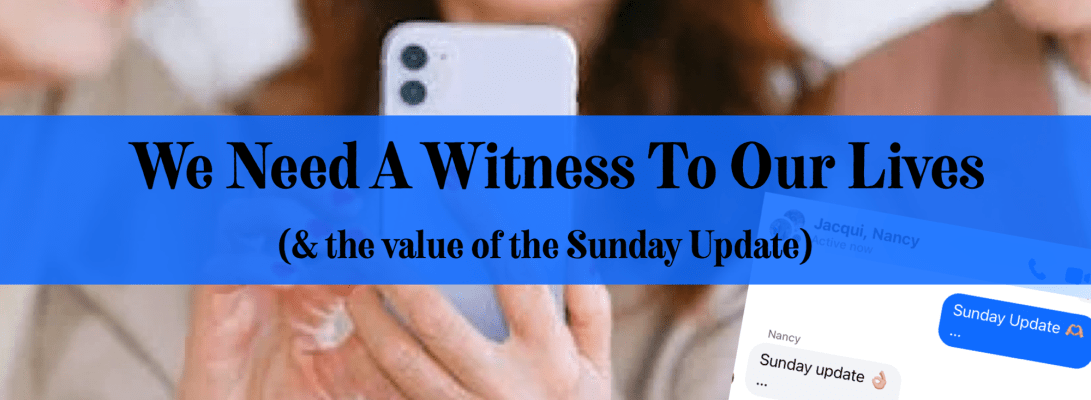
We need a witness to our lives (& the value of the Sunday Update)

There’s nothing like an old RomCom to break through the decision fatigue that comes from scrolling the endless options for watching on the various streaming services. “Shall We Dance?” is a 2004 flick that is good for its genre and suitable to crochet to (if that’s anyone else’s criteria but mine).

But it was this 40 second clip (below) that arrested me and brought me to immediate and fast-flowing tears. Always, when processing feelings and responses, when seeking to understand and be understood, language is key. And these words made sense of my lived experience in a way that helped me name it for myself and explain it to others.

In response to the question of why people get married, Beverly Clark (played by Susan Sarandon) says this …

Because we need a witness to our lives. There’s a billion people on the planet, I mean, what does any one life really mean? But in a marriage, you’re promising to care about everything. The good things, the bad things, the terrible things, the mundane things. All of it. All the time. Every day. You’re saying, “Your life will not go unnoticed because I will notice it. Your life will not go unwitnessed, because I will be your witness.”

It’s been a constant challenge for me in my singleness (& living alone-ness) that there are so many parts of my life that are not known to others. Or perhaps even more accurately, there is no one who knows all about my life. On the phone to my mum I might mention where I’m driving to for work. At work I might tell someone of a dinner I’m going to. In conversation with a friend I tell them of the headache I had last night. At church I share about a recent preaching trip. Another friend helps me process a decision. The neighbour over the road knows I’m away when I ask him to put out my bins. Random social media postings alert to location or activities for anyone curious enough to look. But constantly I find myself speaking to someone about the latest episode of an event or issue in progress only to realise they hadn’t known the first chapters were even happening. “I didn’t know you were unwell.” “When were you away?” “Why were you waiting for a plumber?”

The words of this dialogue resonate. We need a witness to our lives.

For those of you who are married – I imagine your spouse knows every one of those things I mentioned above (even if they may forget). Some of them without you really having to announce or go out of your way to highlight. Those living with family or in a share house would experience that to varying degrees. But it feels like something of an innate need or desire. The feeling of being tracked (in the most appropriate and non-creepy way). The wish to not be the only one who knows your story. (It’s inextricably linked to the fear I expressed in my blog post How long ‘til they realise I’m dead? )

It has been good (and hard) to name that experience. To give language and voice to the challenge of it, the way it can feed a sense of loneliness and isolation, the weariness of the intentionality required to bring people along with you on your life’s trail.

Introducing the Sunday Update

When I managed to share this concept with my girls (through the blubbering and snot that generally accompanies such conversations) along with empathy and space to feel all my feelings – a practical resolve was what has come to be called the “Sunday Update”.

Three of us are in the chat (there are always three, right?) and we each take the time to give a bit of a précis of the week ahead. Where we’ll be on each day. What projects, decisions, discussions, or concerns we’re carrying into the week. What we’re hoping to achieve or bring conclusion to. What we need to focus on, what we need to remember to do. It’s written down so then we are able to refer to it throughout the week. The good, bad, terrible, and mundane things.

Consequently the messages we exchange are more informed. “How was traffic on the way to the office today?” “What time did you get home from the show last night?” “How did that meeting go?” “How is that crocheted baby gift coming along?” “How was school drop off?” “Did the people like your baking?”

Each Sunday (or sometimes Monday 😉 … ) we give a brief review of how we felt about the week before. Summarise some highlights. Express regret over the things that didn’t quite happen as we’d hoped. And then again give the agenda for the week ahead.

We need a witness to our lives (or maybe two). For some, we have that ready made – built into the natural makeup of households and families. But for others it might need more intentionality. Not only do we need a witness – we can BE the witness.

“Your life will not go unnoticed. Because I will notice you.”

“I have lost the back of my chair” – security, support, & singleness

There’s a people group in Northern China – the Uyghur people. When the women lose their partners, they enter a period of mourning that is quite ritualized. As part of this they have a phrase they repeat over and over that, when directly translated to English, means “I have lost the back of my chair.”

It’s a rich and relatable metaphor for all genders, ages, and stages. I have lost the back of my chair.

Go on, do it now. Lean forward from wherever you’re sitting and imagine the chair back (or bedhead, or wall) was no longer there. What would you have lost?

Rest. Support. Comfort. Security.

This is a great physical representation of what it can often feel like for Singles – particularly those who are single-again through divorce or death. I have lost the back of my chair, I’ve lost my security, my rest, my support, my comfort. Without that behind me I am unprotected, I am potentially destabilised, and I am more easily fatigued.

Writer Anabelle Crabb talks about the concept of learned helplessness in marriage. The reality that in a marriage roles are delegated to each partner that make the household functional. They’re assigned by skills or expertise, or interest and passion; or more pragmatically due to other circumstances (who is working in or out of the home, schedules, life stages etc). Over time, as you continue doing these tasks you get better at them. One of you is the master of the roast, one of you does all the tech programming, one of you keeps track of finances; one of you is the grocery shopper. But as you get better at it, the other partner who no longer does it at all unlearns it. Not only are they not perfecting or improving, they’re atrophying in capacity as it gets longer and longer since they last had to do or remember it. And so, when a person finds themselves Single-again they need to relearn a whole lot of things and compensate for the loss of the skills and responsibilities of the other. The same might be true for people living away from family and friends. New to an area or establishing themselves independently. Experiencing changed circumstances.

That’s where community can step in. Here’s how church family gets to be family to those without family. Here’s where the village can embrace and support. We say ‘don’t worry, we’ve got you, we’ll be the back of your chair. You can rest into us. You
can rely on us. You can depend on us to be your support and your strength.’ For those who’ve lost the back of their chair – or those who through various circumstances find themselves without one.

But, to keep the chair analogy going just a little longer, what would happen if the back of your chair was there sometimes but not others? If every time you leant forward you weren’t sure if it would be there when you sat back again? Sure, any offering of help is great and any relief offered ought to be welcomed. But for the benefit to be sure enough for a person to feel truly unburdened consistency is an important factor.

That’s where the security comes in. We need to be reliable means of support to others. Not just to offer once to mow the lawns but to commit to doing that regularly. Not just to program your TV or network your printer – but to be willing to come back when it stops working or needs upgrading.

It’s true for all of us. Whatever our living situation and personal circumstances. We need each other and life is made more manageable and enjoyable when we don’t need to sit forward as it were. Where we can truly recline with confidence that we are held and supported.

I’m still an extrovert – the immutable truths of energy source

It’s been said, mostly by me, that I put the ‘extra’ in extrovert.

Extroversion and introversion are descriptors of energy source and direction. A simple analogy is that extroverts are solar powered and introverts are battery powered. That is, extroverts source their energy externally – from the social and relational stimulation of others. Introverts source and direct their energy more internally. They are recharged by being in more quiet, low-stimulus environments – most preferably alone.

The categorisations of extroversion vs introversion were a helpful discovery for me as I moved into my young adult years. They were informative as I sought a greater depth of self-awareness and understanding, and have proved extremely useful in life and leadership as I’ve worked alongside others. Knowing which you are is essential for your self-management and well being. Consistently operating outside of your natural disposition will see you depleted and ultimately dysfunctional – emotionally, physically and relationally.

It’s a function of adulting and maturing and participating in the world that we learn to manage our natural disposition with the demands and realities of life. Emotionally intelligent introverts realise that they need to be with at least some people for some of the time – family, colleagues, strangers at the supermarket. That we are built for relationship and cooperation. That the company of others and what they bring to our lives is essential for growth and flourishing. That part of exercising our humanity finds its expression in serving and contributing to the lives of others. Emotionally intelligent extroverts realise that being comfortable in one’s own company is an essential part of growth and self-acceptance. That the practices of solitude and silence are useful for reflection and mindfulness. That social stimulation is no replacement for physical rest which is necessary for revitalisation and renewal.

However, any amount of adaptation and intentionality will not override the fundamental truth of where a person’s energy is sourced. We don’t “grow out” of extroversion or introversion. We just find ways to manage our needs in less preferred environments.

Case study – me.

I am a raging extrovert! I am energised by human interaction. The more energised the interaction the more energised I am! While I don’t mind larger, anonymous groups, I’m more fuelled by social interactions that are personal, robustly engaging, stimulating and soul nourishing.

A friend once compared me to her peace lily. The peace lily is a plant and you know when to water one because its leaves start to droop and curl. Give her a drink and her stems will straighten up and leaves unfurl – almost before your eyes. That’s what I’m like with human interaction. People who know me well can tell from 20 paces when I’ve been on my own – my leaves are droopy! Instead of exuding energy and effervescence I radiate ‘flatness’ – like I’ve pulled a few all-nighters in a row! Friends also know that with even the smallest spritzes of the life-giving water of positive human interaction I will come to life before your eyes. You will feel like a magician for the radical turnaround you were able to conjure with just your words and presence!

As someone who has lived much of my adult life alone, sourcing the requisite people interactions to fuel me has always been challenging. Extroversion energy (like introversion energy) doesn’t store well. It requires constant replenishing – which requires constant social exchanges. A large pool of people resource is required in order to account for the number of introverts who will be needing less people time and also the reality that other people have their own lives and calendars to manage.

As a younger person, this drive for externally sourced energy masked as some sort of social animal who couldn’t sit still, stay home or miss out. Over the years, as I learned and understood more, I recognised that physically my body needed rest, stillness, sleep and down time. I’ve grown to appreciate the slow and relaxed – and even the quiet. But these things do not energise me. The reality of energy sourcing is that while my body and mind might benefit from alone time, I am emotionally deenergised by it. It’s a truth that can’t be outgrown or outmanaged.

Navigating this extended season of lockdowns and isolation, working from home, travel restrictions and all manner of limitations has been hard for everyone for a range of reasons. As an extrovert, the reduction of opportunities for live social interactions has been life-draining! While the utilisation of online communication platforms has been a life-saver, there are times when I still can go multiple days without speaking to an in real life adult person.

As I’ve repeatedly bumped into the worst parts of myself – impatience, intolerance, lack of motivation and discipline, reduced creativity and productivity, loneliness, aimlessness and even depression – I found myself increasingly unable to straighten up; to self-correct. “I can do better than this, what am I not doing better than this?” And while myself and others made passing reference to the fact that my current lifestyle and experience wasn’t conducive to extroversion, this was my reality, these were the tools I had, there has to be a way!

So, here’s my revelation and ever deepening conviction – there is no ‘cure’ for extroversion. There’s no sustainable work around. There’s not enough duct tape and stick-to-itiveness to hold it all together before some sort of external assistance is required. This is energy-source facts. It is what it is.

In some ways, this news was deeply disappointing. I guess I was hopeful to discover an alternate energy source that could be self-generated and subsequently self-replenishing. It would be simpler for me if connection to other humans was more optional than essential. The depth of my reliance on other people makes me intensely vulnerable. I need others, most likely disproportionately to how much they need me. (Read more here your single friends need you (probably more than you need them))

Conversely, the discovery was strangely freeing. It gives me permission to feel the lack and grieve it. This is not a deficiency but a reality. It reminds me to tread lightly in my own life in terms of expectations and demands when I’m operating out of a depleted tank. It may helps others around me recognise the valuable offering they can make to my well-being. It doesn’t excuse the times I show up in disappointing ways but it possibly explains some of it. It turns certain behaviours or feelings into the trigger to more intentionally seek out the company and energising of others.

EXTROVERTS – what do YOU think? How does your extroversion play out in your life?

INTROVERTS – does this ring true on the other end of the spectrum? Does identifying the source of your energy help diagnose and manage your own life experience?

the river has moved

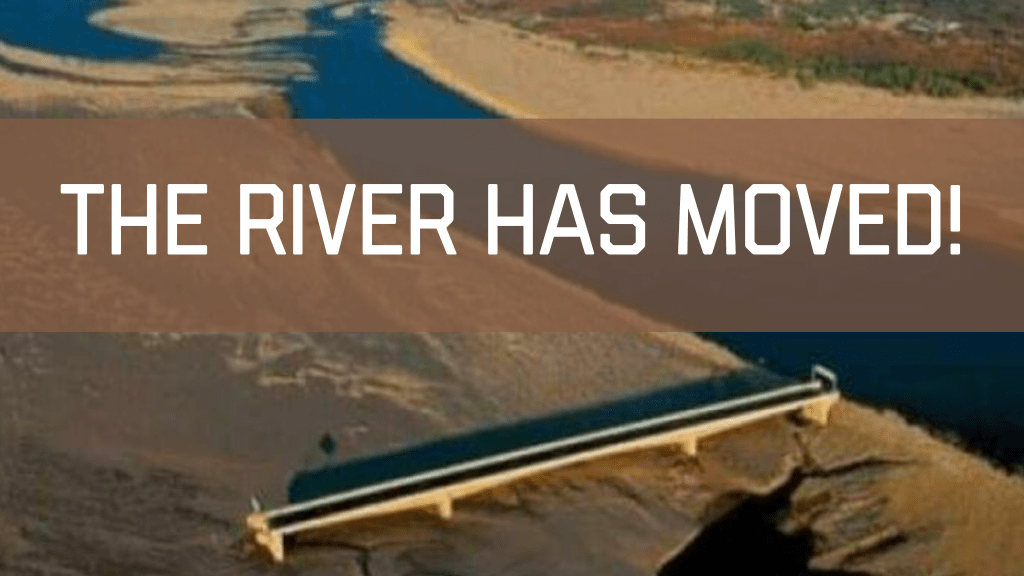
In 1996, the “New Choluteca Bridge” (also known as the Bridge of the Rising Sun as a nod to the Japanese company that designed and constructed it) was built and in 1998 it opened for use in Choluteca, Honduras.

In October of 1998, Hurricane Mitch hit the region causing widespread flooding and devastation. The rising waters took out the access roads either side of the bridge but the bridge remained intact. However, when the flooding subsided it became evident that the river had carved a new path.

They were left with a bridge in near perfect condition that no longer had a function. The roads had disappeared and the river had moved!

I wonder if this isn’t a powerful metaphor for the era we have been (and are still) navigating. A season of incredible change and disruption to the usual flow of work, ministry, and life in unpredicted and varied ways. Although we would be right in hesitating to say that the hurricane has passed and the flood waters have completely receded, we are finding ourselves somewhat on the other side and facing a very changed landscape.

The river has moved!

WHERE IS YOUR RIVER?

It behoves us all, as individuals, families, leaderships and organisations to step back and do some assessing. Where is your river? Has it moved? Where was it? Where is it going now? What of the impact on the surrounding landscape? (I’m told the old river bed would likely now be considered more of a wetland rather than dry land or the usual terrain of river banks.) Where is the high land, the dry land, the firm land? What got washed away in the flood? What is now at the bottom of the newly directed river?

What has changed?

Working with a colleague recently he remarked “2022 won’t just be the 2020 we planned to have”. As we open up and return to some sort of new normal, in our rush to “go back” we can be deceived into thinking that we’ve just been on pause these past months and everything is waiting where it was when we left it. It’s not true. Many things have changed. You have changed, the community has changed (eg, we know differently about what matters to people in society), our engagement with technology has altered, our habits and routines have radically changed, our elderly may have aged inordinately during this time, the socialisation and development of our young people has been disrupted, social confidence has shifted, new patterns of behaviour have emerged (hello church in your jarmies!!!), your staff team might have shifted working hours and onsite routines, and I could go on indefinitely. No doubt you could add to this list from your own experience. Things have changed. It’s important we identify and appropriately acknowledge that reality. We’ll need to grieve some losses and face some truths. Pretending or hoping the river is still the same will get us nowhere.

WHAT’S THE STATE OF THE BRIDGE?

In the aftermath of Hurricane Mitch, the bridge was determined to be almost completely unaffected. Were there still roads accessing it, engineers would have had no problem declaring it fit for traffic. There’s nothing wrong with the bridge, other than the glaring reality that it’s not “bridging” anything anymore! It serves no purpose. Great bridge. Excellent feat of construction. And now obsolete.

In recognising the changes that have taken place in your world it’s inevitable that some of your systems and processes are no longer fit for purpose. Before we jump to defending them, remember, there was nothing wrong with the bridge – it just didn’t have a river under it anymore. We don’t have to disagree with previous practices, we don’t have to ‘backflip’ or contradict ourselves, we don’t need to undermine our credibility or integrity, we don’t have to criticise or pick apart past methods – we purely need to acknowledge that the landscape is different and ask what it requires of us.

What does a new river path require of us?

Could we relocate the bridge? Do our previous systems still work they just need to shift over a bit? Or do we need a new kind of bridge for new conditions?

Can we apply the same principles of design that were used for the old bridge? Or do we need to explore new engineering, new types of footings, new construction methods, different materials?

WHAT DOES THIS MEAN FOR ME?

If things have shifted, as we know they have for everyone to some degree, and the old structures, old ways, old thinking aren’t going to cut it for moving forward into the future. What do we need to do?

Business leadership author, Marshall Goldsmith, puts it this way in the title of his book “What got you here won’t get you there.” New horizons, new frontiers, new experiences require new methodology, thinking and practice. What has served you in the past may not serve you so well in the future. If the ways you – or WE if we’re thinking more corporately or collectively – have been thinking, acting, believing, preparing and functioning were attached to the ‘old way’ of life then those behaviours and attitudes might need adjusting.

QUESTIONS

How has the ‘river moved’ in your life, family, organisation, work, or ministry?
What might you need to do differently as a result?

Big Questions from Little People

I love hearing from parents about the ‘awkward’ conversations they have with their inquisitive children.

“Miss 6 wanted to know what ‘sexy’ means.”

“I overheard my kids calling one another ‘gay’ while they were fighting. When I asked them to stop they wanted to know what ‘gay’ meant!”

“My daughter was reading the Bible and wanted to know how Lot’s daughters got pregnant.”

Most times these conversations aren’t quite as traumatic as we make them out to be for the purposes of telling an entertaining story, but more often than not these questions catch us off-guard. We know that “ask your mother/father/teacher/pastor” is hardly an acceptable response – even if it does seem to be the first one to come to mind – and the next one is usually something like “you’re not meant to ask that question for another couple of years!”

I’m often asked for ‘advice’ to help navigate the more sensitive discussions parents are called upon to conduct. I’m certainly no expert but here are my three top tips that may be helpful for those of you preparing for such conversations (or hiding here online to buy time to respond to that question you were just asked!)! 🙂

1. Ask clarifying questions before launching into your response

2. Don’t overshare.

3. Check their comprehension.

A mum was driving with her kids in the back of the car when one of them piped up and asked “Mum, where do I come from?” The mum took a deep breath and launched into a stilted recount of the process of creating human life until her daughter interrupted and said “no, I mean, what hospital was I born in!?” Apparently they had driven past one and she wondered if that’s the one she ‘came from’!

Ask clarifying questions.

A child once asked his mother what sex was and before replying she said “why do you ask?” The son said, “Because Dad said he would play with me in two secs!”

Clarifying questions are helpful to make sure you’re answering what they ACTUALLY want to know and not giving unnecessary (and potentially unhelpful) information.

Once I was watching television with a friend and her 8 year old daughter. The show made reference to AIDS and Miss 8 turned to us and asked “what’s AIDS?” The mother blanched! She whispered to me, “how am I meant to explain that? … intravenous drug use and risky sexual behaviours …” I turned to Miss 8 and said “it’s a disease in the blood.” At which point she turned back to watching the tv.

Don’t overshare.

You know your children better than anyone and can probably best assess their level of cognition and emotional maturity to know how much information they really need to satisfy their curiosity or give them a degree of peace in relation to what they’re asking. By asking clarifying questions you can find out what it is that they are really concerned about. You can discover what they are mentally calculating and processing and how much information will be helpful for them to come to a satisfactory conclusion … for now. They will no doubt have additional questions as they process the information you give them, as their intellect develops and as they are ready to process more details or more complex ideas.

Before your chat is over (and potentially again at a later time or date), check what they have understood from what you’ve said. “Tell me what I just said in your own words.” or “How would you answer that question if someone else asked it?” “Do you have any other questions?” “Has that helped you understand?” Whatever you can ask that satisfies you they have received your information as correctly and usefully as possible.

Check their comprehension.

Finally … don’t forget to keep sharing the stories with other parents (& me). We can all learn something from your experiences … and they do make the most entertaining stories! 🙂

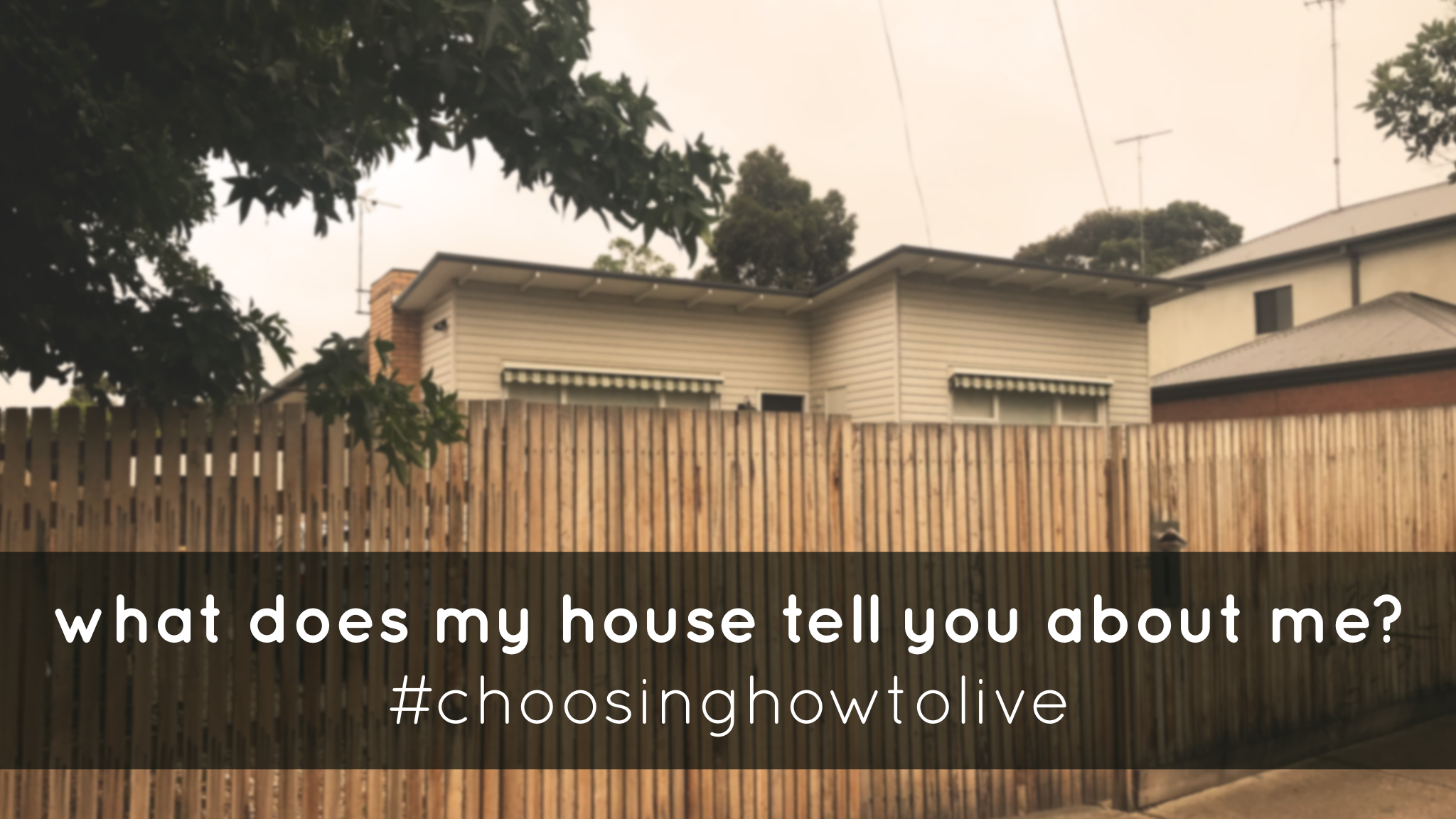
what does my house tell you about me? #choosinghowtolive

Last year I started to act on the sense of calling to move to a new area after living in the same community for close to 20 years.

There are LOTS of things to consider when you look to make a move like this. Of course there’s a whole slew of financial and adult-type decisions to make (spending limits, mortgage options, market speeds etc). And there are the more practical aspects like access to the freeway for driving to my work or the number of rooms I need or the amount of garden I could possibly hope to manage. (Let’s face it, I’m paying someone else to do that regardless of how big or small it is. Know your limits.)

A primary motivator for the move was to locate myself more intentionally in proximity to people I want to do life with. I am well engaged in my local church so I wanted to live close to it and to the other people who are part of that community. And of course, there were a few ‘wishes’ amongst that in terms of the style and character of the home, the number of established trees nearby and a few other preferences that would always give way to other more significant values.

As I was processing all of these things, the sense that grew to a conviction for me was that it wasn’t just a matter of choosing where to live but how to live.

If I’m starting with a blank canvas and almost every option is on the table – what is going to be the overarching framework for how I decide? And the question reverberated,

How do I want to live?

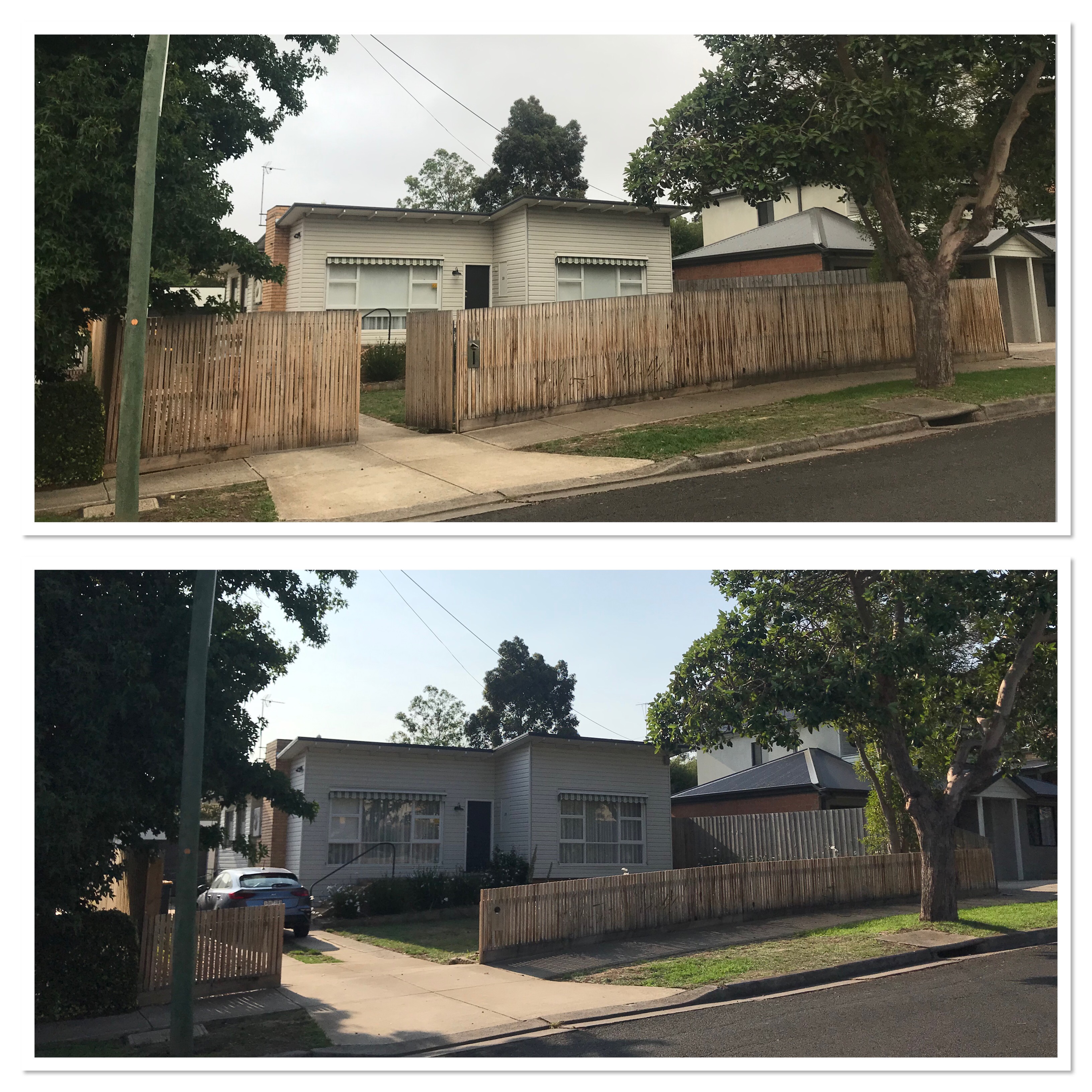
That was an entirely different way to look at things. Not just WHERE do I want to live but HOW did I want to live? Quite a few things rose to the surface and shaped my priorities but they could best be summarised this way; I wanted to live in community. Like, actually IN community. I want to live within walking distance to a community hub of shops and activity that will allow me to play and shop locally. I want to live in a location that is easily accessed by others and where I can develop relationships with my near neighbours (after 17 years in my previous home I didn’t know the names of anyone in my street). I want to have a home that allows me to host and nurture community through shared hospitality and warm inclusion. The list could continue if we were to move beyond the geographical and practical considerations (which maybe I’ll explore in future blogs) but for now, that’s enough of a summary. And it was this filtered searching process that led me to purchase the house I now own and live in. (Which I love! Check it out, how cute is it!!??)


I love sitting in the light-filled loungeroom watching and listening to the activity of the community that moves along my street. There’s a teenage boy who catches the school bus at the end of my street and when he walks past he bounces his basketball and it makes me smile to think how he is probably getting into constant trouble for the repetitive noise but I love it. There are some teenage girls who catch the same bus and sometimes they’ve walked past singing at the top of their lungs. There are families with dogs and young children on scooters, people tending their front yards and nature strips, friends honking their horns as they drive by, visitors coming and going and all manner of sights and sounds. I love it.

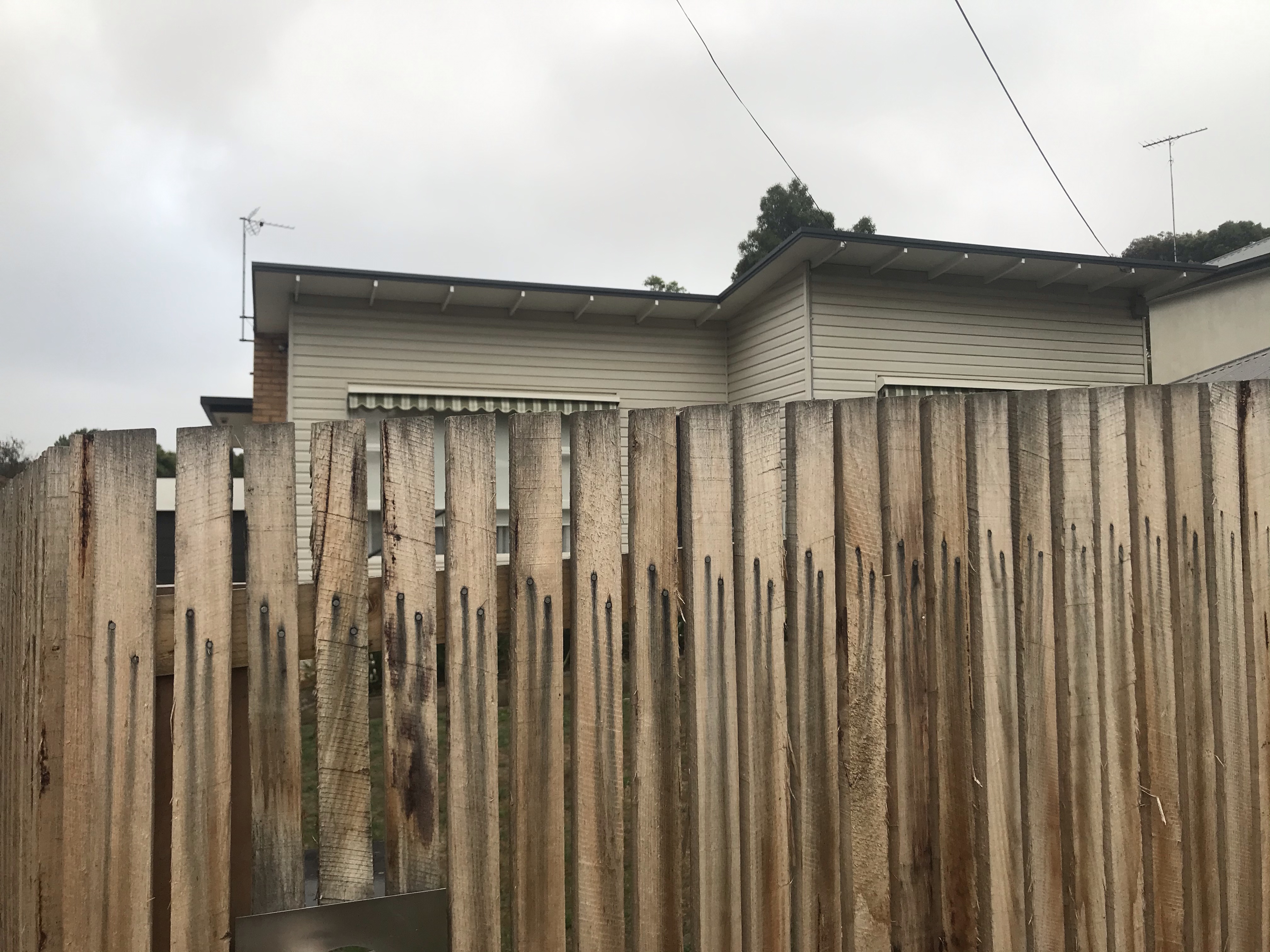
BUT, this is the view you would have of the house if you were to walk by on the footpath.


And this will. not. do!!

It’s the only house in the whole street that has a fence that high. In fact, when describing it to people I would say “it’s the one near the corner with the very high fence.” because it was the distinctive feature. That fence is almost 6ft tall. Most people can’t see over it at all. I can see over it from the elevated loungeroom and with the benefit of sheer curtains to shield my privacy, but anyone really wanting to look into my property would have to get up on their toes and crane their neck and be altogether un-subtle.

Some of you are thinking, “yep, that’s what a fence is for! Security, privacy and generally stopping nosey neighbours from seeing into your property!” But that’s not how I choose to live!

I imagine the children of the neighbourhood speculating about who or what is hiding behind that fence. “My ball went over the fence once and I was too scared to go and get it.” “I hear she collects the legs of crickets in jars.” I know, I know! My overactive imagination has been well documented and is clearly at play here! But you get the gist. When filtered through the “how do I want to live” question, a high fence is communicating exactly the opposite to my values and desires.

So, the fence got a trim!


How great is that? Who doesn’t love a good before and after transformation?

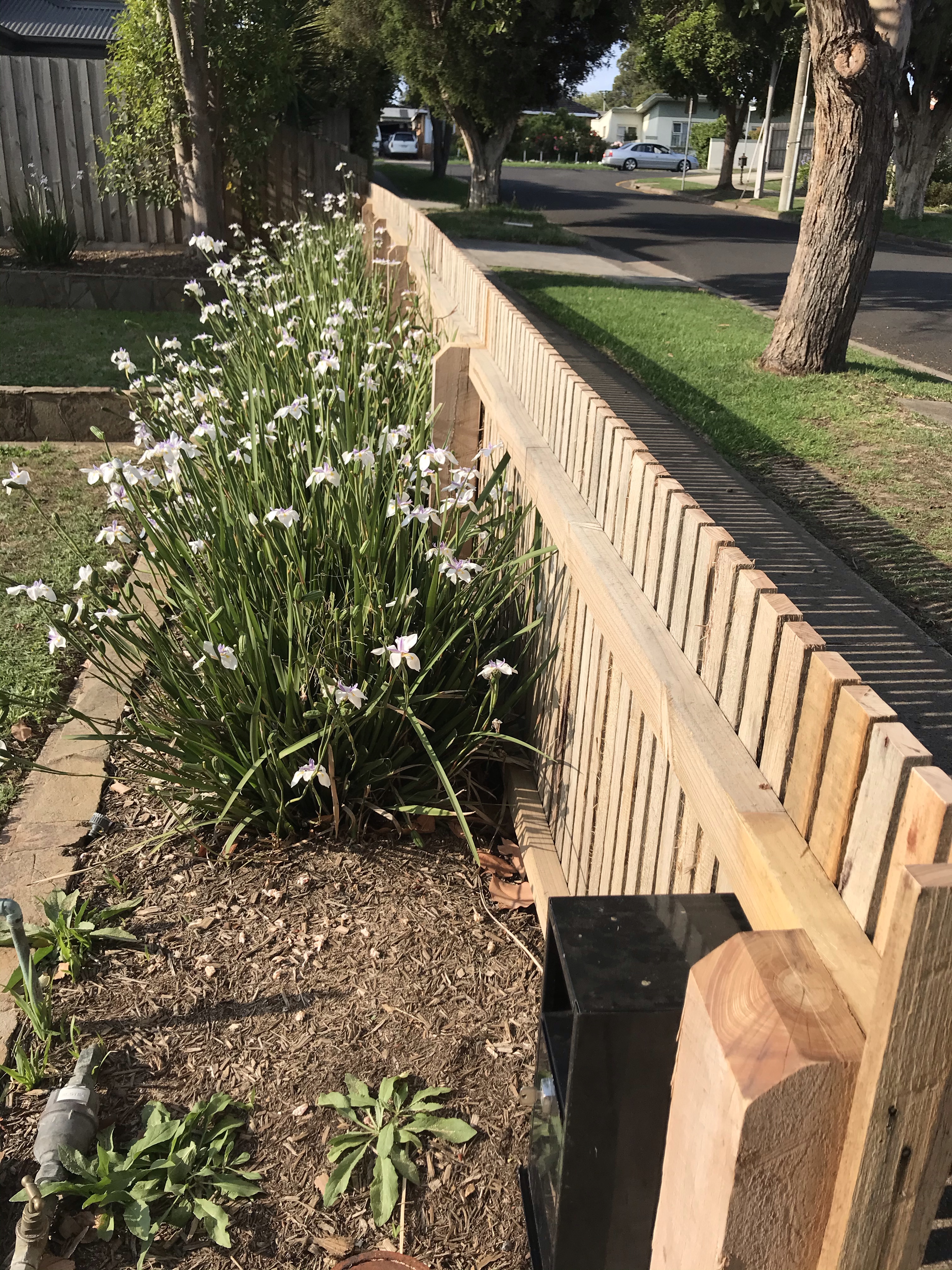
I feel like my house now says what I want it to say about who lives there and how she’s choosing to live. The large gates are gone, the fence is trimmed. People might not even really notice the difference or be thinking about what they’re thinking about when they look at my house now. But it’s not sending the wrong sub-conscious message anymore.

And last week, the guy with the basketball walked down the street and bounced his ball on top of my fence smiling to himself as he successfully balanced it the whole length of my block.

And just to add to my sense of joy and satisfaction in living where I live – I have landed amongst some great neighbours … one of whom voluntarily did the labour of cutting my fence down!! Can we just pause for a moment to admire the excellent work of my neighbour Blake? I came home one Saturday to a spotless front yard and a shrunken fence … amazing!!!


isolation and living alone

There are only so many times a living-alone-Single-extrovert can hear the words ‘isolation’, ‘social distance’ and ‘cancelled’ before the weight becomes a little too much to carry and it has to leak out of my eyes! Yesterday I had a significant ‘moment’ (think tears, snot, a few little hiccup-y gulps and one or two audible groans!).

Last month I shared a post how long ‘til the realise I’m dead? and it seemed to resonate. Single people commented repeatedly “This is exactly how I feel!” and married responses repeated the sentiment “I’ve never even thought about this before.”

The same people who worry about not being discovered to have died are bound to be experiencing an additional layer of anxiety in the face of these shut downs and measures of separation to responsibly manage the movement of COVID19 and it’s impact on our health care system and to protect our most vulnerable.

CHECK ON THEM!

Social media is being flooded with posts from Introverts saying this is their idea of heaven. From what I understand, the cancellation of social events and being ‘forced’ to stay at home are the stuff their dreams are made of! 🙂 HOWEVER, even the most introverted of introverts could acknowledge that, as much as they love being alone and are personally energised by that time to recharge, there’s also the reality that without the interruption of exchange with others there can be an un-health that shapes their thought life. As much as they can do without social interactions, the circuit breaker of other people’s engagement in their thought processes and internal dialogue is a healthy and necessary thing.

CHECK ON THEM!

As organisations (like mine!) move to working from home (can we just pause for a praise break that we live in such technologically advanced times – so many opportunities to stay working and connected through online platforms!) while this is a fantastic provision – it’s also a socially isolating move. Many living-alone-Singles rely on the accountability and regular interactions of work life and will struggle without it. As churches move to streaming their services, be reminded that it’s not just the sermon or worship our congregations will be missing (in fact, these things have been out-source-able for a long time now) it’s the connection to one another, a sense of engagement in something bigger than themselves, the opportunity to keep regular relational accounts with one another – to give and receive prayer and encouragement.  (My church has set up an online/phone prayer service to facilitate this – what a great initiative!)

CHECK ON THEM!

For those of us living alone who have the love language of physical touch – this experience has another layer of impact. The social distancing protocols don’t apply within your households. You might sleep closer than 1.5m to your spouse. Go ahead and TRY convincing young children not to invade your (or each other’s) personal space – that’s not happening! So, even in a time of physical disconnection you’re experiencing some connection. In my regular life I can go days without physical touch and now, it’s mandated! In my little ‘moment’ yesterday, this was part of my processing … how long do I have to go without any physical connection?

CHECK ON THEM!

I messaged my friends – the ‘her is ours now’ family referenced in this blog being family to those without family – and shared about my little meltdown and said “I decided you could adopt me, then if we need to isolate I’ll isolate with my ‘family’”. The response was, essentially, an affirmation that they thought I already WAS adopted, and that if we get shut in as family-units then my place of shut in is with them! “If ‘Her is ours now’ then ‘her corona is our corona now’ too!”

Of course, we’re prayerful that the measures our country are employing now might avoid a complete lock-down. Things are changing daily as we continue to track the spread and learn what we can from other countries (another praise break – how grateful are we for all the fabulously smart and compassionate people in our medical system?!) and there’s no real point in leaping ahead to worst case scenarios. Being sensible and caring in this moment is our best next step. If I came to know I was infected I would never intentionally expose them to the virus.

But, I can’t tell you the relief that came to me in my emotionally charged episode, to have my friends make it clear that I won’t have to be alone. It was such a circuit breaker for my fear, loneliness, overwhelm and distress. There’s a plan, an option.

CHECK ON YOUR LIVING ALONE FRIENDS.

If only to give them a safe place to process the emotions they might be feeling. Each of us will travel an experience like this differently as it’s shaped by our lifestage, personality, health status and other factors. Let’s do what we can to grow in our understanding and empathy for one another.

how long ’til they realise I’m dead?

img_2899

I wondered if it was just my overactive imagination, or perhaps the product of watching too many true crime documentaries, but a quick poll of some of my Single friends tells me I’m not alone in asking this question. How long could I be dead before people would notice I’m missing?

I’ve seen the news reports – I’m sure you’ve seen them too – where neighbours alert authorities to an unpleasant smell, an overflowing mailbox or dogs barking incessantly and the subsequent inquiries reveal someone who has died. Clearly, some time ago. And it had gone seemingly unnoticed until now. It’s one of my worst fears.

As someone who lives alone and quite independently, there are often long stretches of time between points of check in. Frequently, when travelling between locations – the office, home, from one work visit site to another, church, a friend’s, the gym, a family event – I’ll find myself calculating the amount of time there is until the next point that my absence would be noticed. My church friends might just assume I’ve slept in or I’m speaking at another church, the gym has my money and doesn’t check to see why I didn’t show up to a class I’ve booked, my work colleagues could assume I’m having meetings or working offsite … it leaves substantial chunks of time in which I could be dead (or in less dramatic but still significant difficulty!) and no one knows yet.

I spend a lot of time on the road. That same active imagination allows me to envisage a scenario where I’m involved in an accident of some catastrophic, fatal nature, and the attending emergency services have to find out who I am. They could discover my home address but no one would be there. They could knock on a neighbour’s door but it depends which door they chose as to how helpful that would be. They could try the last number called in my phone – but that could be someone that I don’t even know personally. Anyway, these are long drives, I’ve had plenty of time to (over)think.

I recently saw a conversation thread on an online chat forum that raised the topic of Singleness and Illness. Pertinently, several Single post-ers commented on bouts of sickness that saw them home-bound for multiple days without anyone inquiring or offering assistance. For many, it was not so much the issue of being unable to look after themselves or requiring medical care but the fear attached to the experience. What if my condition worsens? How long must it be before someone notices my absence?

Of course, the answer is simple and, perhaps, obvious. A Single person who is sick just needs to make sure they let someone know they are, right? But the flip side of that is the often larger fear of Singles that they are perceived as needy or overly focussed on themselves. “Hi Pete, just ringing to let you know I have a bit of a cold coming on.” “Lucy, it’s 8:07, I’m leaving home. It’s 8:52, I’ve arrived at work. It’s 4:39, I’m going home via the supermarket.”

Every time I speak (write) something like this out loud it’s met with an enthusiastic cry of “yesssssss!” from Singles and a general sense of relief to hear that someone else knows and understands. That maybe they’re not so strange, or needy, or self-focussed – that maybe, just maybe, this reflects a legitimate heart cry to be known, looked-out-for and not too far beyond the reach of care or interest.

Couples and families, next time you’re feeling “checked up on” you might consider the gift that is to you. When you’re someone’s someone, they generally care about where you are! They keep short accounts. They check if you’re not where you’re meant to be when you’re meant to be. There’s a blessing in there that you could be mindful to appreciate.

And all of us, check in on your Single friends! Notice when they’ve not been in touch for a while, inquire about their health, show interest in their movements and schedule. It doesn’t take much to keep everyone connected … and off the news!